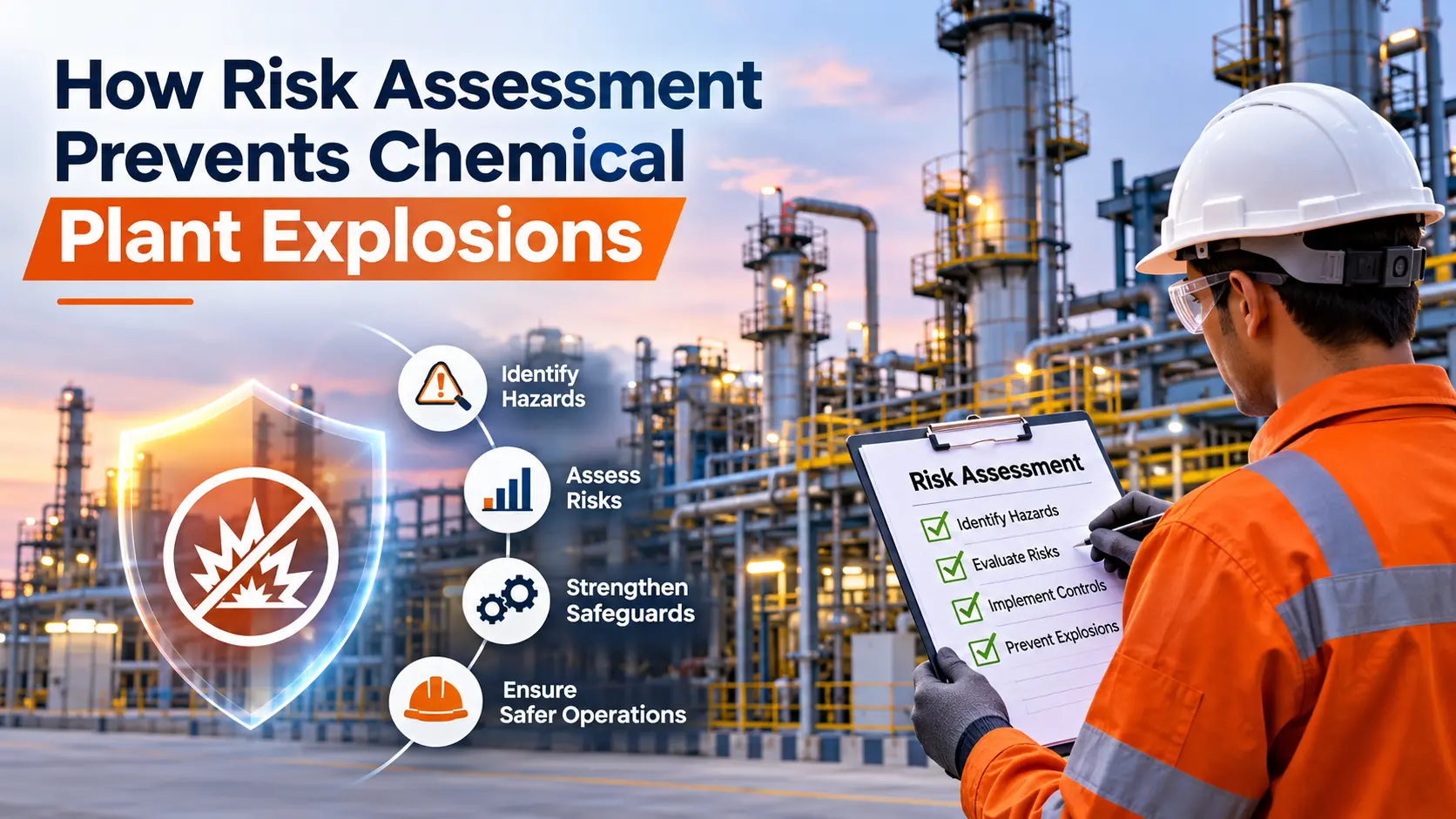

Chemical plants handle hazardous substances, including flammable liquids, combustible gases, and reactive chemicals. Equipment failures, handling errors, and uncontrolled reactions can lead to fires, explosions, serious injuries, and prolonged shutdowns.
A chemical plant explosion can occur within seconds, but the conditions that lead to it often develop over time. Equipment may deteriorate, operating conditions may change, or a protective system may become unavailable. A chemical plant risk assessment helps operators identify how these conditions could combine, which safeguards they rely on, and where they need to take action.
This article explains how plants identify explosion hazards, evaluate their consequences, and use assessment findings to protect employees, facilities, and operations.
Why Are Chemical Plants Vulnerable to Explosions?
Chemical manufacturing can involve high temperatures, elevated pressures, reactive substances, and potentially explosive atmospheres. Depending on the process, an explosion may result from ignition of a flammable gas or vapor cloud, ignition of suspended combustible dust, an uncontrolled reaction, or the sudden rupture of pressurized equipment.
Common Causes of Chemical Plant Explosions
- Flammable gas or vapor leaks. Releases from pipelines, valves, storage tanks, or process equipment can create a flammable atmosphere.
- Equipment failure. Corrosion, mechanical damage, and inadequate maintenance can compromise containment.
- Uncontrolled chemical reactions. Unexpected reactions or loss of cooling can cause temperature and pressure to rise rapidly.
- Ignition sources. Electrical faults, static discharges, hot surfaces, and hot work can ignite a flammable atmosphere.
- Operational errors. Unclear procedures, insufficient training, and communication failures can contribute to an incident.
- Inadequate safety systems. Missing, poorly maintained, or ineffective safeguards can allow an initial event to escalate.
What Is Risk Assessment in a Chemical Plant?
A chemical plant risk assessment identifies hazards, examines how accidents could occur, evaluates their likelihood and consequences, and determines whether existing safeguards provide sufficient protection. It considers how equipment, operating conditions, hazardous substances, human actions, and protective systems interact.
The assessment typically involves five stages.
- Hazard identification. Determine what could go wrong during chemical processing, storage, handling, and maintenance.
- Scenario analysis. Trace how an equipment failure, process deviation, or operating error could initiate an accident.
- Risk evaluation. Assess the likelihood and potential consequences using qualitative or quantitative methods suited to the scenario.
- Risk control. Identify measures that could prevent the event or limit its consequences.
- Review and monitoring. Verify that safeguards remain effective as equipment and operating conditions change.
The assessment should support a practical decision for each significant scenario. Can the plant rely on the safeguards in place, or does it need to make a change?
How Risk Assessment Helps Prevent Chemical Plant Explosions
1. Identifying Explosion Hazards Before Incidents Occur
An assessment examines chemical storage areas, production equipment, pipelines, reactors, loading stations, and utility systems. The choice of method depends on what the team needs to understand.
- Hazard Identification (HAZID). Identifies potential hazards during facility design, modification, or operation.
- Hazard and Operability Study (HAZOP). Examines deviations from intended process conditions, their causes and consequences, and the safeguards in place.
- Hazard Identification and Risk Assessment (HIRA). Evaluates identified hazards and helps the team prioritize controls.
For example, a HAZOP study may identify a blocked reactor outlet as a credible cause of excessive pressure. Engineers can then assess whether the existing pressure protection is suitable for that specific scenario and whether additional safeguards are needed.
2. Evaluating Fire and Explosion Consequences
Once a team identifies a credible incident, it needs to understand who and what could be affected. A fire and explosion risk assessment (FERA) examines potential effects on personnel, equipment, buildings, and surrounding areas.
Depending on the scope, the assessment may examine:
- Flammable gas and vapor releases.
- Pool fires, flash fires, and jet fires.
- Vapor cloud explosions.
- Explosion overpressure and thermal radiation from fires.
- Potential escalation to nearby equipment.
The findings can inform decisions about equipment separation, fire protection, and emergency arrangements.
3. Assessing the Reliability of Safety Barriers
Chemical plants rely on gas detection systems, emergency shutdown systems, pressure relief devices, alarms, containment measures, and operating procedures. For each scenario, the assessment team examines what each safeguard must do, whether it can act in time, and how the plant verifies that it remains available.
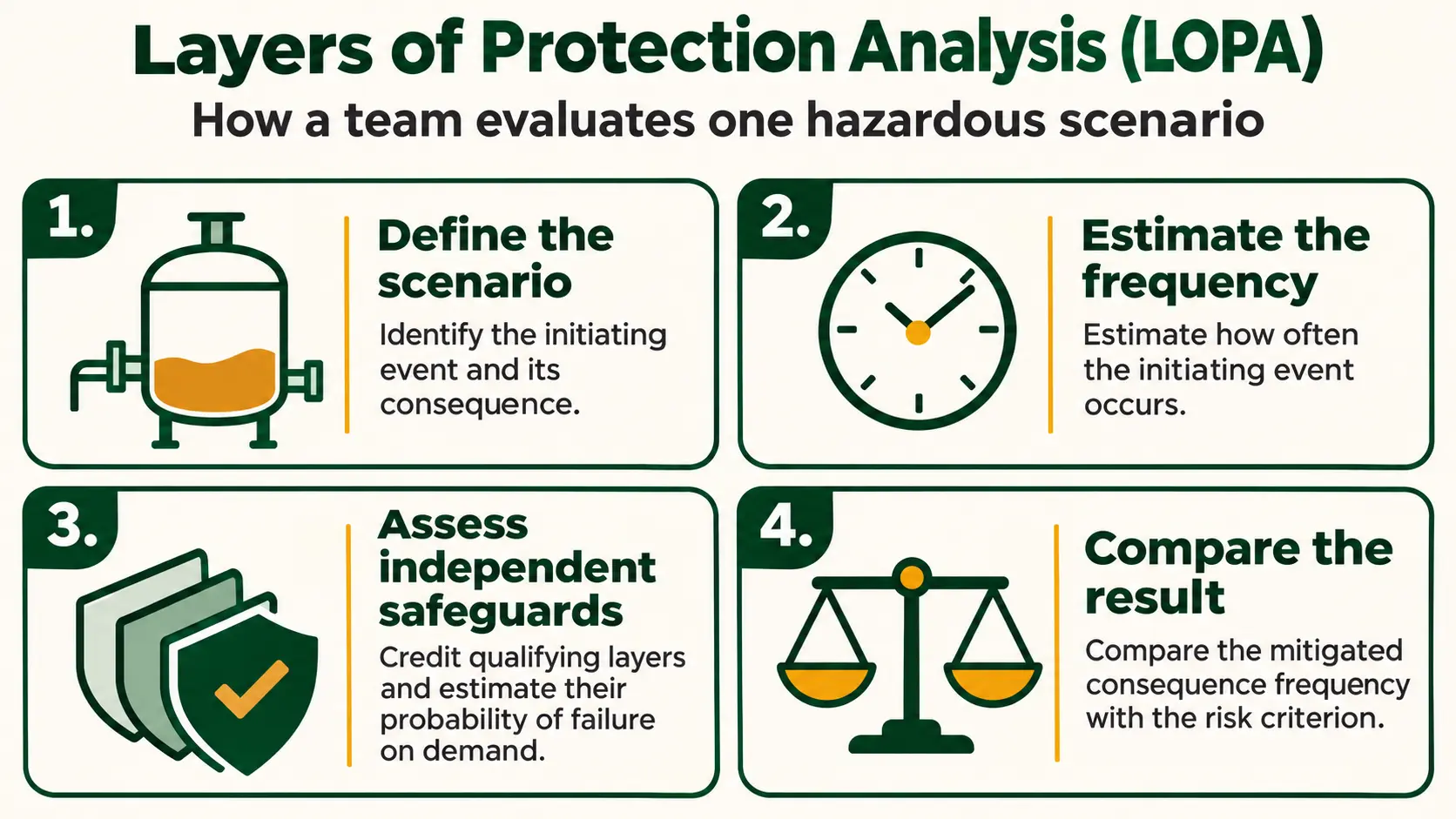
Layer of Protection Analysis (LOPA) helps the team evaluate independent protection layers and identify any additional risk reduction needed. Where the plant relies on a safety instrumented function, Safety Integrity Level (SIL) determination helps establish the risk reduction that function must provide.
4. Preventing Chemical Runaway Reactions
A runaway reaction can develop when a reaction generates heat faster than the system can remove it. As the temperature rises, the reaction may accelerate, increasing heat generation and potentially raising pressure inside the vessel.
Risk assessments examine conditions that could initiate a runaway, including loss of cooling, incorrect chemical addition, contamination, and unexpected operating conditions. Depending on the reaction and equipment, the team may need to evaluate temperature monitoring, automated shutdown functions, emergency cooling, and pressure relief.
5. Improving Emergency Preparedness
Risk assessment also considers how a facility can limit harm if an explosion or major chemical release occurs. Findings can support:
- Emergency response planning.
- Identification of evacuation routes.
- Emergency isolation arrangements.
- Evaluation of fire and gas detection coverage.
- Emergency communication procedures.
- Personnel training and response exercises.
These findings give response teams specific scenarios to practice and help employees understand their responsibilities during an emergency.
Key Risk Assessment Methods Used in Chemical Plants
| Risk assessment method | Primary purpose |
| HAZID | Identify potential hazards and major accident scenarios. |
| HAZOP | Examine process deviations, their consequences, and existing safeguards. |
| HIRA | Evaluate hazards and prioritize risk controls. |
| FERA | Assess credible fire and explosion scenarios and their effects. |
| Quantitative Risk Assessment (QRA) | Estimate risk using scenario frequencies and consequences. |
| LOPA | Evaluate independent protection layers and determine whether more risk reduction is needed. |
| Bow Tie Analysis | Map threats, the loss of control event, potential consequences, and the barriers on either side of the event. |
A plant may use several methods together. For example, a HAZOP can identify an overpressure scenario, and a LOPA can then examine whether the independent protection layers provide sufficient risk reduction for that scenario.
When Should Chemical Plants Conduct Risk Assessments?
Chemical facilities should review risks at important stages of the plant lifecycle, particularly when equipment, substances, or operating conditions change.
- During design and engineering. Identify hazards while the team can still change equipment selection and layout.
- Before commissioning or startup. Use a pre-startup safety review to check readiness and confirm that required safeguards are in place.
- During process modifications. Evaluate the effects of proposed changes to chemicals, equipment, operating conditions, or procedures before implementing them.
- Following a significant incident or near miss. Identify contributing factors and determine whether corrective actions are needed elsewhere in the plant.
- During periodic safety reviews. Reassess hazards, operating experience, and the effectiveness of protective measures.
The review frequency should reflect applicable requirements, the facility’s risks, and its process safety management arrangements.
Business Benefits of Chemical Plant Risk Assessment
Reduced likelihood of major incidents. Identifying credible accident scenarios helps operators prioritize measures that can prevent fires, explosions, and hazardous releases.
Improved operational reliability. Addressing equipment vulnerabilities and process deviations can reduce unexpected shutdowns and production interruptions.
Better investment decisions. Assessment findings help managers direct spending toward scenarios with significant consequences or gaps in protection.
Stronger regulatory readiness. Documented assessments can help a facility demonstrate how it identifies and manages process hazards under applicable requirements.
Improved employee protection. Preventive and mitigating safeguards can reduce employees’ exposure to hazardous releases, fires, and explosions.
How Aura Safety Supports Chemical Plant Risk Assessment
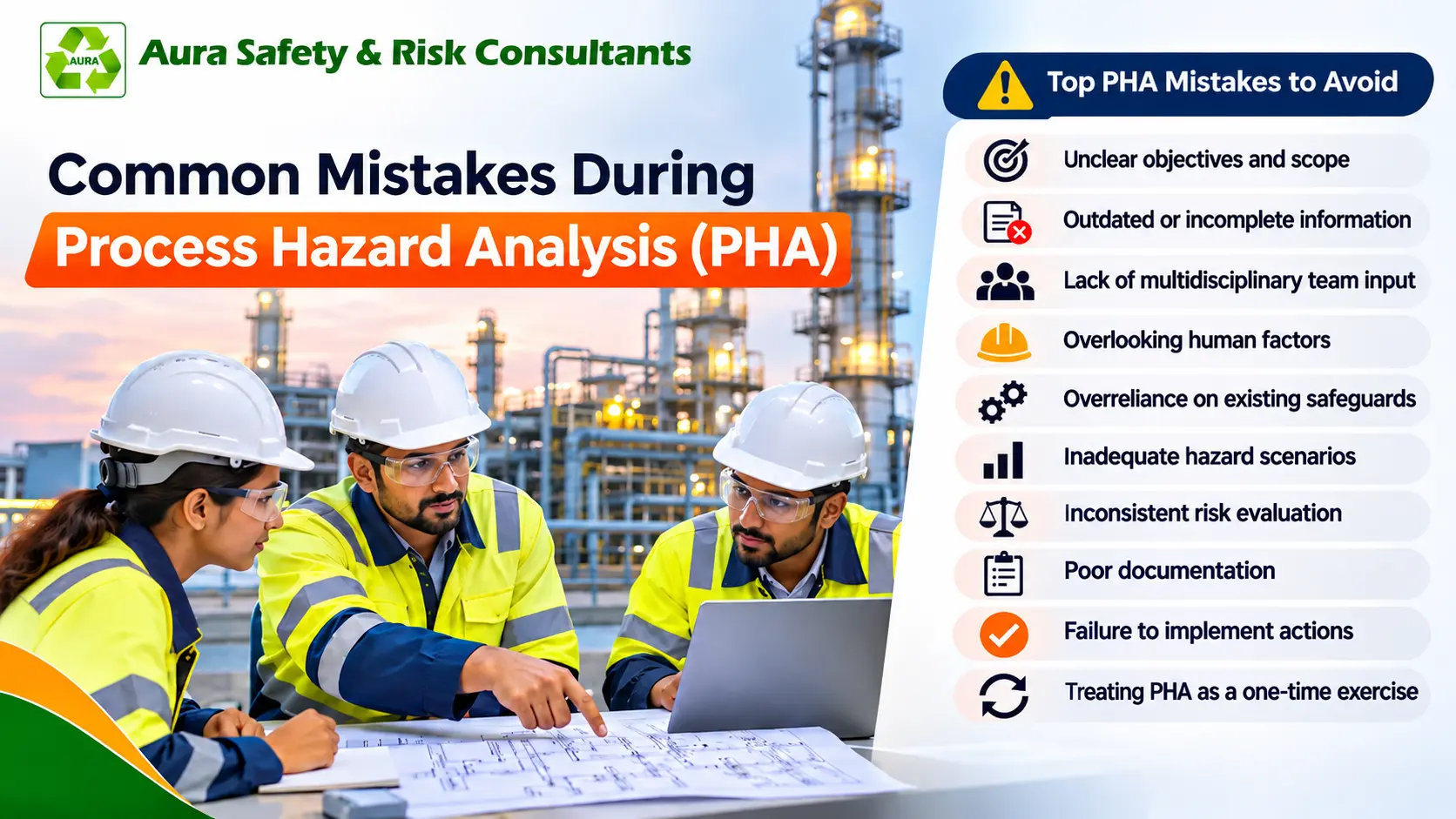
Aura Safety & Risk Consultants supports industrial organizations in identifying process hazards, evaluating risks, and reviewing safeguards. Its process safety services include HAZID, HAZOP, HIRA, FERA, QRA, Bow Tie Analysis, and SIL services.
These assessments help chemical plant operators examine credible scenarios, identify the safeguards each scenario depends on, and determine where additional risk reduction is needed.
Conclusion
Chemical plant risk assessment helps operators connect a hazard to a practical decision. A blocked reactor outlet, for example, gives the team a specific question to resolve: can the existing pressure protection handle that event?
Explosion prevention depends on what happens after the assessment. Operators need to act on findings, verify critical safeguards, and revisit assumptions when the process changes.
Strengthen Chemical Plant Safety with Aura Safety
Identify explosion hazards, evaluate critical safeguards, and understand your facility’s process safety risks through a structured assessment.
Get a quote · Explore process safety services
Frequently Asked Questions
What is the main purpose of risk assessment in a chemical plant?
The purpose is to identify hazards, evaluate credible accident scenarios, and determine which controls are needed to protect personnel, equipment, and operations.
How does a HAZOP study help prevent chemical plant explosions?
A HAZOP team examines deviations such as high pressure, high temperature, or loss of flow. It identifies possible causes, traces their consequences, and reviews the safeguards in place so the plant can address gaps in protection.
What is the difference between HAZOP and FERA?
HAZOP starts with a deviation from the intended process conditions and examines what could follow. FERA focuses on credible fire and explosion scenarios and evaluates their potential effects on people, equipment, and buildings.
Can risk assessment completely eliminate chemical plant explosion risks?
No. An assessment identifies credible hazards and gaps in protection. Implementing and maintaining suitable safeguards can reduce the likelihood of an explosion and limit its consequences.
How often should chemical plants conduct risk assessments?
Timing depends on applicable requirements, facility hazards, and operating experience. Plants should also review relevant assessments when they propose significant process changes or when an incident or near miss calls an earlier assumption into question.