
Introduction
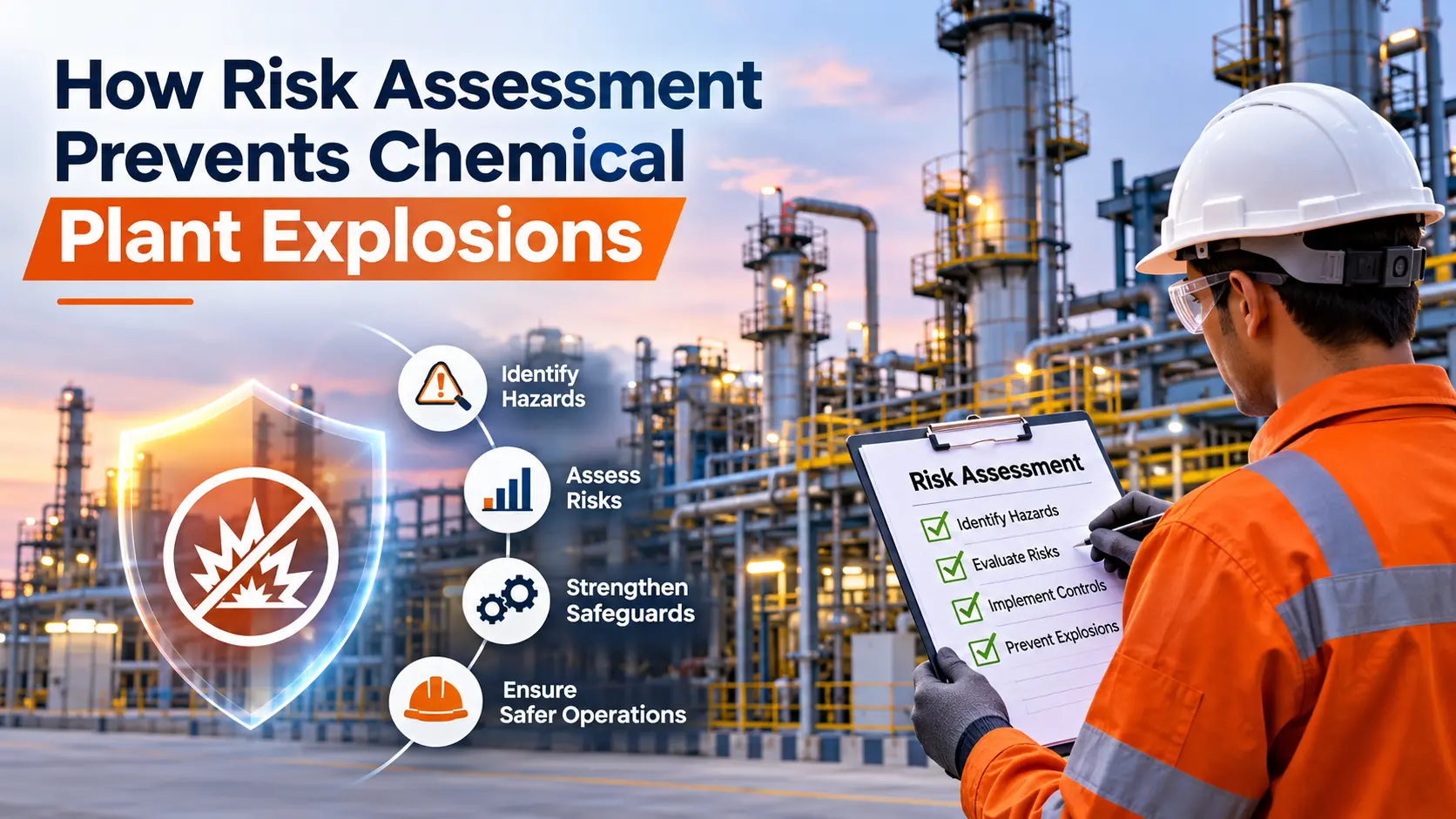
Process Hazard Analysis (PHA) helps organizations identify potential hazards, evaluate their consequences, assess existing safeguards, and recommend measures to reduce operational risks.
Even a well-planned study can produce unreliable results when the team overlooks a hazardous scenario, relies on outdated drawings, or leaves recommendations unresolved. A pressure relief device shown on a drawing, for example, may have been modified since the drawing was last updated. If the team credits the original device, its assessment may overstate the protection available.
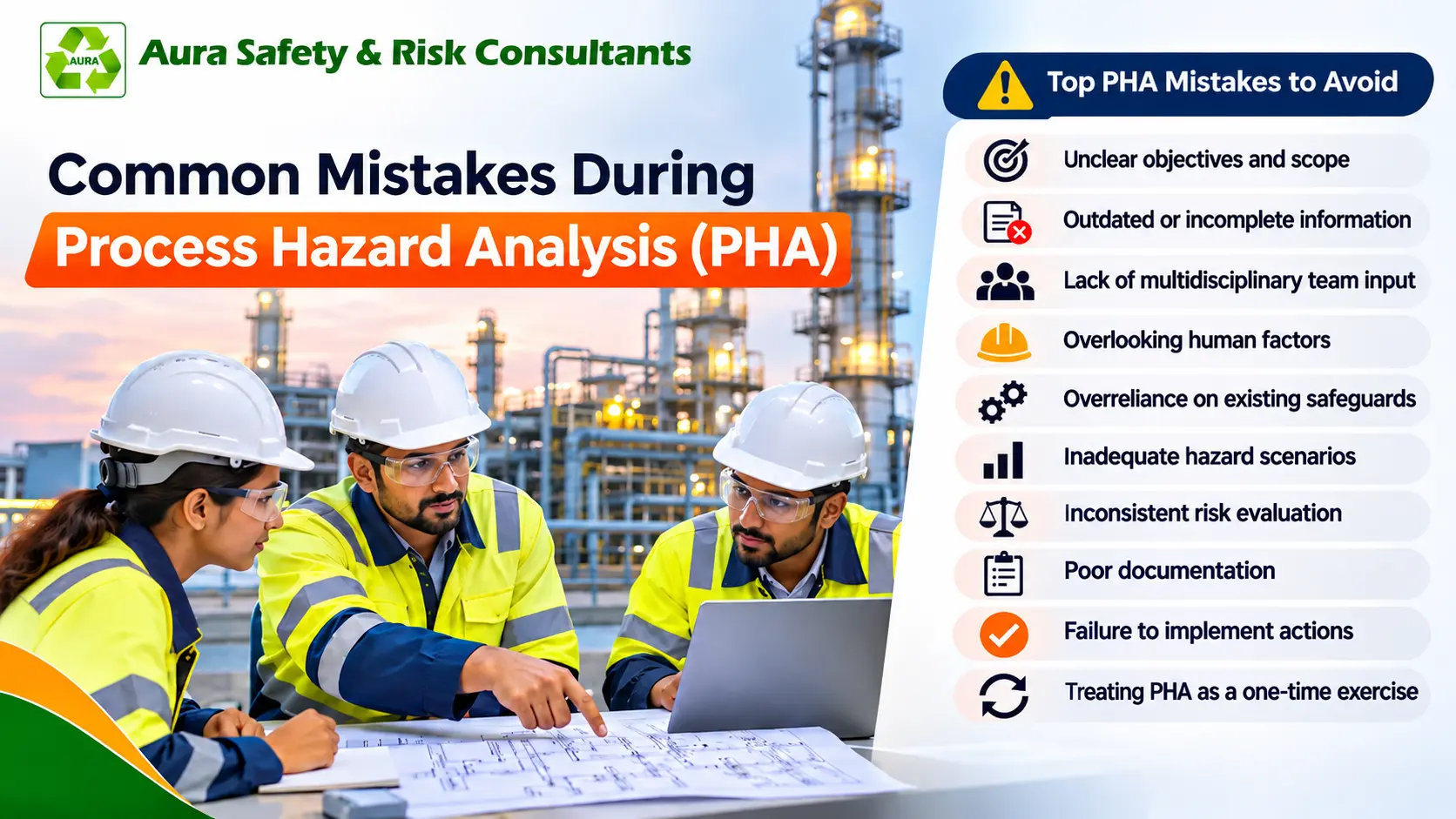
For industries such as oil and gas, petrochemicals, chemicals, pharmaceuticals, and manufacturing, the quality of a PHA influences decisions about equipment, operating procedures, and safeguards. This article explores ten common PHA mistakes, their potential consequences, and practical ways to avoid them.
What Is Process Hazard Analysis (PHA)?
Process Hazard Analysis is a systematic approach to identifying and evaluating hazards associated with industrial processes, equipment, materials, and operating conditions. It examines how process deviations, equipment failures, human errors, and external events could lead to hazardous situations.
Depending on the facility and the questions the team needs to answer, a study may draw on the following methods:
- Hazard and Operability Study (HAZOP) examines deviations from design intent to identify hazards and operability concerns.
- What-If Analysis uses questions about hypothetical failures and abnormal conditions to explore their potential consequences.
- Failure Mode and Effects Analysis (FMEA) identifies how equipment or systems can fail and examines the effects of each failure mode.
- Fault Tree Analysis (FTA) works back from an undesirable event to examine combinations of failures that could cause it.
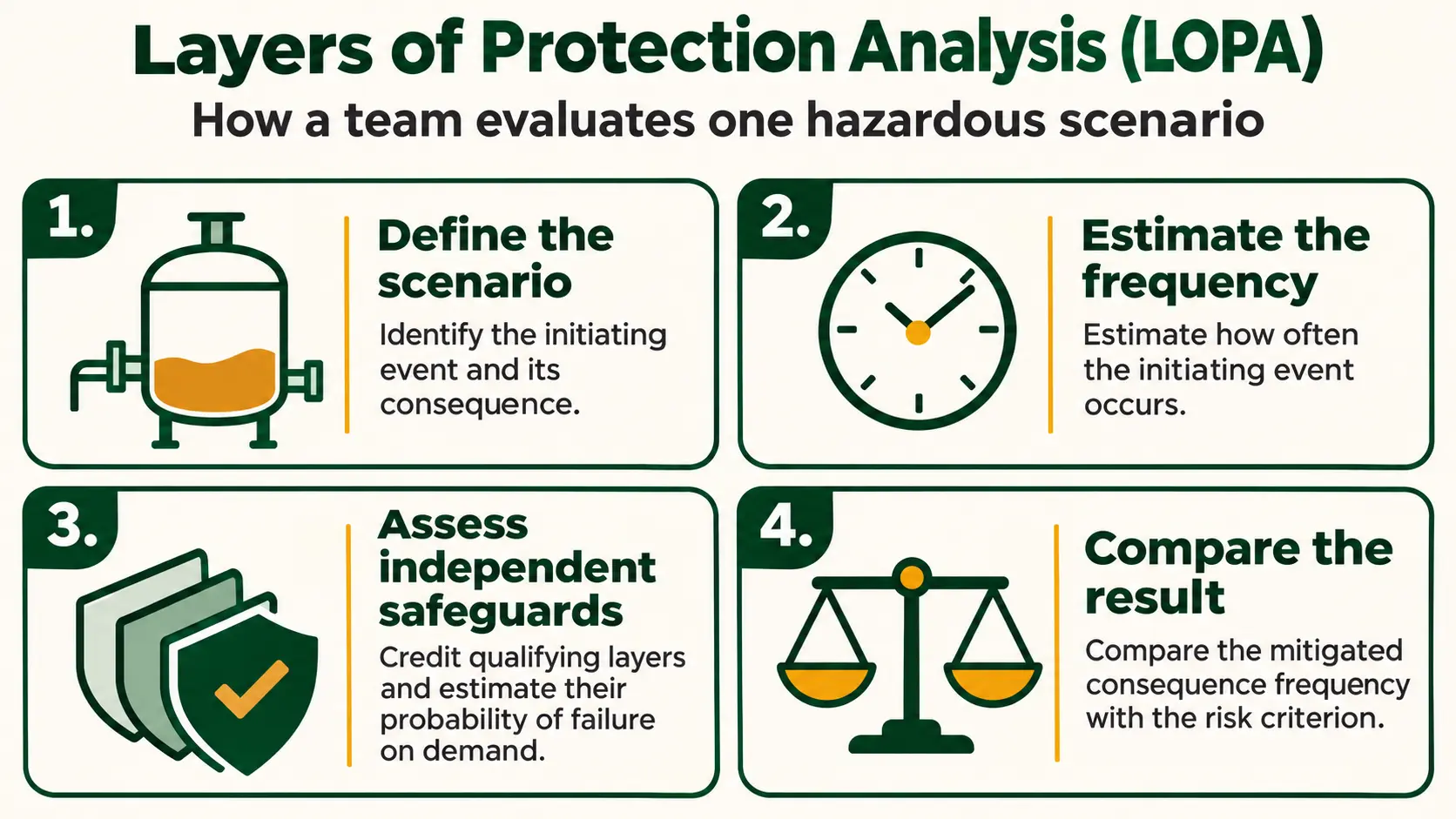
- Layer of Protection Analysis (LOPA) can follow hazard identification to evaluate whether independent protection layers provide sufficient risk reduction for a defined scenario.
10 Common Mistakes During Process Hazard Analysis
1. Starting a PHA Without Clear Objectives and Scope
An unclear scope can cause the team to overlook equipment, operating conditions, or interfaces between process units. For example, a study focused only on normal production may miss hazards associated with startup, shutdown, maintenance, or emergency operations.
How to avoid this mistake. Before the workshop, document the study objectives, process boundaries, operating modes, assessment method, and expected deliverables. Identify where the process connects to other units or shared utilities so the team knows which interfaces to examine.
2. Using Outdated or Incomplete Process Information
Outdated piping and instrumentation diagrams (P&IDs), incorrect operating parameters, or incomplete equipment specifications can lead to inaccurate findings. If a pressure relief system has been modified and the drawings still show the previous configuration, the team may incorrectly assess the protection available.
How to avoid this mistake. Verify that the documents reflect the configuration being assessed. Relevant inputs include P&IDs, process flow diagrams, equipment specifications, operating procedures, material safety information, and incident records. Record any information gaps and resolve them before finalizing the findings that depend on them.
3. Failing to Involve a Multidisciplinary PHA Team
Process hazards rarely fall within a single engineering discipline. Engineers can explain the design intent, while operators can describe recurring deviations, equipment limitations, and how people carry out the work. Maintenance personnel can identify risks that arise when equipment is isolated or taken out of service.
How to avoid this mistake. Include people with relevant knowledge of process engineering, operations, maintenance, instrumentation, and health, safety, and environment (HSE). An experienced facilitator should invite each discipline to contribute, particularly when actual operating practices differ from the written procedure.
4. Overlooking Human Factors and Operational Errors
Unclear instructions, confusing alarms, hard-to-reach controls, and time pressure can affect how people respond to process conditions. A worksheet entry such as “operator opens the wrong valve” captures the error but leaves the team with little information about how to prevent it.
How to avoid this mistake. Examine the conditions under which a foreseeable error could occur. Review operating procedures, control-room interfaces, alarm management, training, and maintenance activities. For a valve-selection error, ask how the operator identifies the correct valve and whether its label and position are visible from the point of operation.
5. Relying Too Heavily on Existing Safety Controls
The presence of an alarm, interlock, relief device, or emergency shutdown system does not establish that it provides adequate protection for a particular scenario. A safeguard may be poorly maintained, incorrectly configured, or dependent on another control that the team has already credited.
How to avoid this mistake. For each credited safeguard, document which event it prevents or which consequence it mitigates. Examine whether the initiating failure could also disable the safeguard or whether two safeguards share a dependency. Where further evaluation is needed, LOPA can help the team assess the risk reduction provided by independent protection layers.
6. Inadequately Identifying Hazardous Scenarios
Teams that concentrate on familiar equipment failures or previous incidents may overlook utility interruptions, simultaneous failures, or external events. For example, a loss of cooling water could affect several units at once. Examining each item of equipment in isolation can obscure the wider consequences.
How to avoid this mistake. Use a structured method to examine credible deviations, initiating causes, consequences, and safeguards. Consider process interactions and common-cause failures. For a shared utility, trace which units depend on it and what happens when they lose it at the same time.
7. Applying Risk Rankings Inconsistently
Risk rankings help teams prioritize scenarios for further action. Similar scenarios may receive different ratings when participants interpret likelihood and consequence categories differently or disagree about which safeguards the rating already accounts for.
How to avoid this mistake. Define consequence severity, likelihood categories, and the treatment of safeguards before the assessment begins. Apply the selected risk matrix consistently and record the reasoning behind significant ratings so a later reviewer can understand the decision.
8. Poorly Documenting PHA Findings
Recommendations such as “check the system” or “improve safety” give the person responsible little direction. Without a clear link to the scenario, an engineer reviewing the report may struggle to determine what needs checking, why it matters, or what evidence would resolve the concern.
How to avoid this mistake. Record the initiating cause, potential consequences, existing safeguards, risk evaluation, and recommendations for each relevant scenario. Make each recommendation specific enough that its owner understands the required action and the expected outcome. These records also support management of change and future PHA revalidation.
9. Failing to Implement and Track PHA Recommendations
A comprehensive report can leave hazards inadequately controlled if nobody owns the follow-up. Recommendations may remain open when responsibility, resources, or completion dates are unclear.
How to avoid this mistake. Assign an accountable owner and a target completion date to each recommendation. Record its resolution and verify that the agreed action was implemented effectively before closing it. If a recommendation is modified or rejected, document the technical justification and approval through the organization’s established process.
10. Treating PHA as a One-Time Exercise
Equipment modifications, new raw materials, revised operating procedures, increased production capacity, and lessons from incidents can change a process risk profile. An earlier assessment may no longer describe how the facility operates.
How to avoid this mistake. Integrate PHA reviews into the facility’s process safety management system. When a significant change is proposed, use the management of change process to determine which scenarios need further analysis. Conduct periodic revalidation according to applicable requirements and organizational procedures.
What Happens When PHA Mistakes Are Ignored?
Weaknesses in a PHA can affect workplace safety and business performance. Potential consequences include:
- Increased incident exposure. Unidentified or inadequately controlled hazards may contribute to fires, explosions, toxic releases, or injuries.
- Unplanned downtime. Equipment failures and process incidents can interrupt production.
- Financial losses. Incidents can generate repair costs and business interruption expenses.
- Compliance challenges. Incomplete assessments or unresolved recommendations may make it difficult to demonstrate that applicable PHA obligations have been met.
- Reduced confidence in safety systems. When the basis for crediting a safeguard is unclear, teams may struggle to judge whether they can rely on it.
Addressing these weaknesses helps organizations make better-informed decisions about process safety investments and operational controls.
Best Practices for Conducting an Effective Process Hazard Analysis
Prepare Accurate Process Documentation
Confirm that drawings, operating information, and equipment details are available and reflect the process configuration under review.
Engage the Right Technical Expertise
Include people who understand process design, day-to-day operations, maintenance, instrumentation, and safety.
Apply a Structured Assessment Method
Use a consistent approach to identify hazards, evaluate consequences, and assess safeguards. Record enough detail for someone outside the workshop to follow the reasoning.
Track Recommendations to Verified Closure
Monitor agreed actions and retain evidence that they were completed and addressed the concern that prompted the recommendation.
Review Assessments as Processes Evolve
Incorporate operational changes, lessons from incidents, and updated technical information into the relevant assessments.
How Aura Safety Supports Effective Process Hazard Analysis
At Aura Safety & Risk Consultants, we help organizations identify credible hazardous scenarios, evaluate existing controls, and determine where further risk reduction may be needed.
Through our process safety services, we support businesses seeking to improve hazard identification, risk evaluation, and safety-related decision-making. Our focus is on helping teams translate assessment findings into practical actions that support personnel protection and operational reliability.
Conclusion
A PHA is most valuable when the team can trace a credible hazard from its initiating cause through the safeguards and follow-up actions. Outdated drawings, missing operational knowledge, inconsistent risk rankings, and unverified recommendations can break that chain.
Prepare the information the team needs, involve people who know the process, and document why each safeguard receives credit. When the study calls for action, verify that the completed work addresses the hazard identified in the workshop.
Improve Your Process Safety Risk Assessment with Aura Safety
Whether you are planning a new assessment or reviewing existing process hazards, Aura Safety & Risk Consultants can discuss your study objectives, process boundaries, and next steps.
Frequently Asked Questions About Process Hazard Analysis
What are the most common mistakes during Process Hazard Analysis?
Common mistakes include an unclear scope, outdated process information, insufficient team participation, overlooked human factors, incomplete scenario identification, overreliance on safeguards, inconsistent risk rankings, poor documentation, unresolved recommendations, and failure to revisit the assessment as the process changes.
Why is a multidisciplinary team important for PHA?
A multidisciplinary team combines knowledge of design intent, operating practices, maintenance, instrumentation, and safety. An operator may identify a recurring deviation that is absent from the drawings, while an instrumentation specialist can explain how the controls respond to it.
How often should a Process Hazard Analysis be reviewed?
Review frequency depends on applicable regulatory requirements, facility risk, and organizational procedures. Some regulatory frameworks specify revalidation intervals. Significant process modifications or new hazard information may also prompt a review before the next scheduled revalidation.
What is the difference between PHA and HAZOP?
PHA is the broader term for systematic assessment of process hazards. HAZOP is one PHA method. It uses guidewords and process parameters to identify deviations from design intent and examine their causes, consequences, and safeguards.
How can organizations improve PHA effectiveness?
Organizations can improve PHA effectiveness by maintaining accurate documentation, selecting a method suited to the study objectives, involving experienced personnel, evaluating safeguards for each scenario, and tracking recommendations through verified completion.