

We make it easy to find hidden radiation and keep your building completely safe for everyone inside.
You cannot see radiation. You cannot smell it. But it might be inside your building right now. If people stay in a room with too much radiation, they can get very sick.
Our building radiation risk assessment is a smart safety check. We test your space to find hidden danger. We help you fix it fast. Many companies also combine radiation testing with broader process safety programs to improve workplace protection and compliance.
Building owners have a big job. You must keep your workers and visitors safe. A simple test helps you do this.
Where does this invisible danger come from? It comes from the things used to build your walls and floors.
Many building parts come from the ground. Things like sand, rocks, and red clay bricks hold tiny bits of radiation. This is completely natural, but it can still add up in a closed room. In high-risk facilities, companies may also perform a Quantitative Risk Assessment— QRA to understand overall exposure and operational risks.
Builders like to save money. They use leftover factory waste to make strong concrete. This waste is called fly ash or slag. Using fly ash is great for the earth, but it often hides a lot of radiation. It must always be tested. A proper HIRA can help identify these hidden hazards before construction or occupancy.
This is the biggest hidden danger. When rocks inside your walls slowly break down, they make a heavy gas called radon.
Testing sounds hard, but we make it very easy for you. Here is exactly what we do:
Our experts come to your building. We look at the concrete and the bricks. We check if your rooms have good fresh air. For industrial facilities, this process may also support a wider hazop study to identify operational risks.
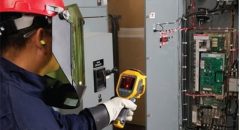
We bring very smart electronic tools.
We take all the numbers back to our lab. We give you a simple paper. It tells you right away if your building is safe or unsafe. Many organizations also review regulatory guidance such as QRA study requirement India standards for compliance planning.
If we find too much radiation, we do not leave you alone. We tell you exactly how to fix it. We might tell you to add better fans or paint the floors with a special seal. Depending on the facility type, additional safety evaluations such as Fire Audit vs. Fire Risk Assessment may also be necessary.
Do not take chances with health. Protect your building and everyone inside it. Call Aura Safety today to book your fast and easy radiation check. Facilities handling energy storage systems should also review Fire Risk Assessment for Lithium-Ion Battery safety requirements for complete protection.
+91 99994 02106
Identify, evaluate, and control process hazards with expert risk assessments, ensuring safe, reliable, and compliant industrial operations.
Identify, evaluate, and control process hazards with expert risk assessments, ensuring safe, reliable, and compliant industrial operations.
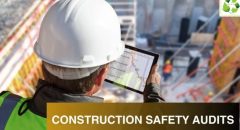
Implement site safety plans, audits, and training to prevent accidents, ensuring safer construction environments and regulatory compliance.
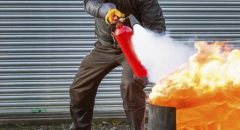
Design, engineer, and audit fire protection systems ensuring reliable performance, asset safety, and adherence to national safety standards.
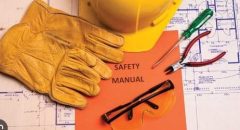
Empowering workforce with certified HSE, fire, and industrial safety training programs for skill development and regulatory competence.

Create immersive, interactive VR safety training modules for realistic learning experiences in hazard recognition and emergency preparedness.
The AERB sets a public exposure limit of 1 mSv per year.
Yes, some natural stones can have higher radioactivity; testing ensures safety.
Good ventilation helps reduce radon gas and lowers indoor radiation levels.
Yes, recycled and eco-friendly materials must also meet safety limits.
After major renovations, material changes, or every few years for monitoring.
A Fire Audit is often a compliance inspection, while a Fire Adequacy Study is a detailed technical evaluation that measures performance and system sufficiency against fire-risk scenarios.
It is a safety test. Experts use electronic tools to measure the invisible energy coming from your building's walls and air. It makes sure the building is safe for people to use.
Things pulled right from the earth have the most radiation. Granite rocks and red clay bricks have natural radiation. Recycled factory dirt, like fly ash concrete, can also have high levels.
Radon is an invisible, heavy gas. It is made when radioactive rocks inside your walls slowly break down. Breathing it inside a closed room is very bad for your health.
The safe global limit for a normal person is 1 mSv per year. If the radiation inside your building stays under this low number, it is totally safe to live or work there.