


Workplace injuries can occur without warning. A worker may suffer a deep cut while handling machinery, sustain an injury from a sharp tool, or experience severe bleeding following an industrial accident. In serious cases, significant blood loss can lead to shock, a life-threatening condition that requires immediate medical attention.
Knowing how to provide first aid for bleeding and shock can help employees respond effectively during the critical moments before professional medical assistance arrives.
For businesses operating in manufacturing, construction, logistics, warehouses, and other industrial environments, first aid preparedness is an essential part of workplace health and safety management.
This guide explains how to recognize different types of bleeding, control blood loss, identify the symptoms of shock, and provide appropriate first aid while waiting for emergency medical services.
What Is Bleeding and Why Is Immediate First Aid Important?
Bleeding, also called haemorrhage, occurs when blood escapes from damaged blood vessels. It may result from cuts, puncture wounds, crushing injuries, falls, or other traumatic incidents.
Bleeding can be external, where blood leaves the body through an open wound, or internal, where blood accumulates inside the body.
Minor bleeding may stop with basic first aid. However, severe or uncontrolled bleeding can cause rapid blood loss, reduce oxygen delivery to vital organs, and lead to life-threatening complications.
Prompt first aid helps to:
- Reduce blood loss through appropriate bleeding-control techniques.
- Lower the risk of further injury and wound contamination.
- Support the injured person’s condition until medical assistance arrives.
- Recognize potentially life-threatening injuries early.
- Improve coordination during workplace emergency response.
Important: Life-threatening bleeding is a medical emergency. Activate emergency medical services immediately and begin appropriate bleeding control without delay.
Types of Bleeding: Understanding the Differences
Recognising the nature and severity of bleeding helps first aid responders determine the urgency of the situation.
1. Arterial Bleeding
Bleeding from a damaged artery may be rapid, forceful, or pulsating. It can cause life-threatening blood loss and requires immediate emergency treatment.
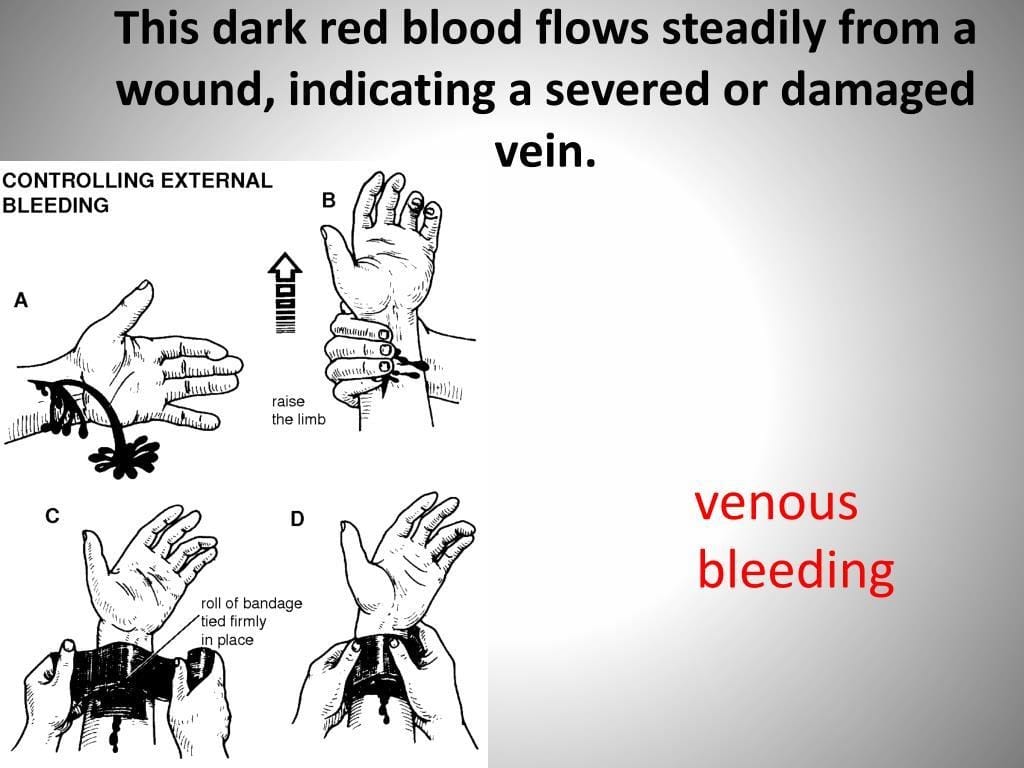
2. Venous Bleeding
Bleeding from a damaged vein may flow steadily and can be severe, particularly when larger veins are injured. Direct pressure is an important initial control measure.
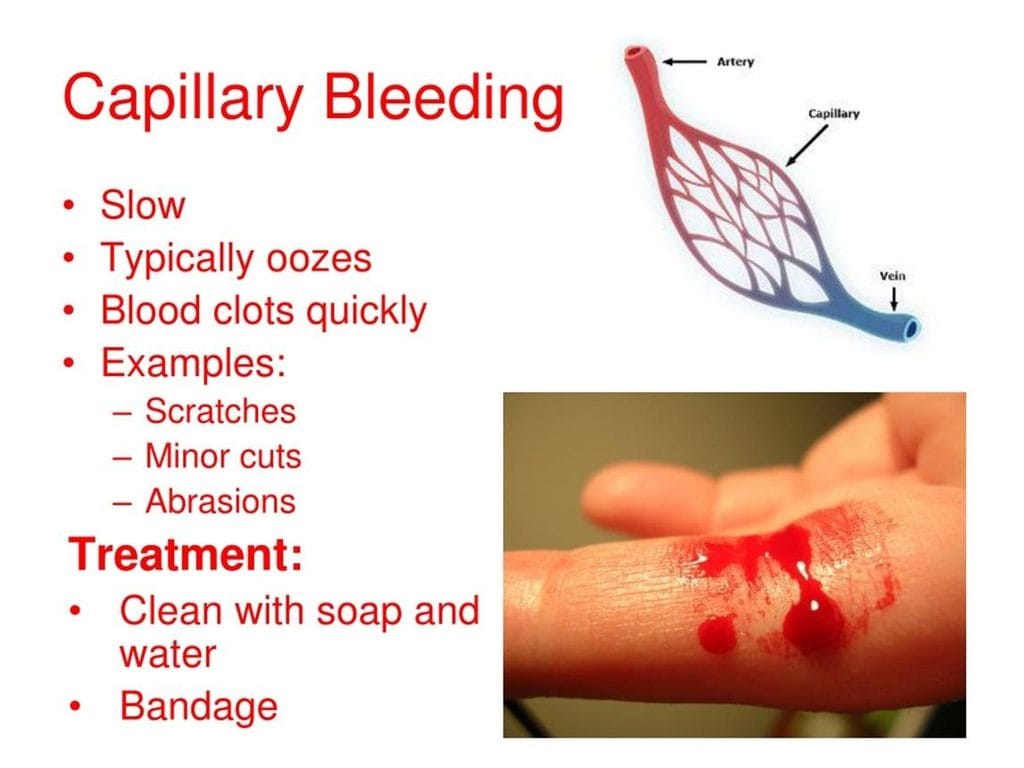
3. Capillary Bleeding
Bleeding from small blood vessels typically occurs with superficial cuts and abrasions. It usually involves slow oozing and can often be managed with basic wound care.
The appearance of blood alone should not determine the severity of an injury. Responders should prioritize the amount and rate of blood loss, the injury location, and the injured person’s condition.
Step-by-Step First Aid for Bleeding
The primary objective of bleeding first aid is to control blood loss, protect the injured person, and arrange medical care when necessary.

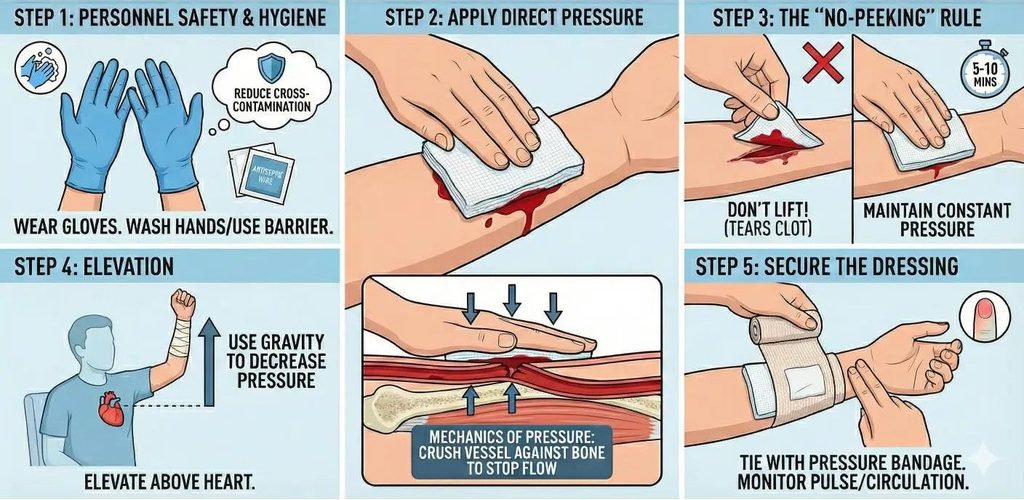
Step 1: Ensure Scene Safety
Check for hazards such as moving machinery, electrical equipment, chemicals, sharp objects, or traffic before approaching. Wear protective gloves when available and avoid direct contact with blood.
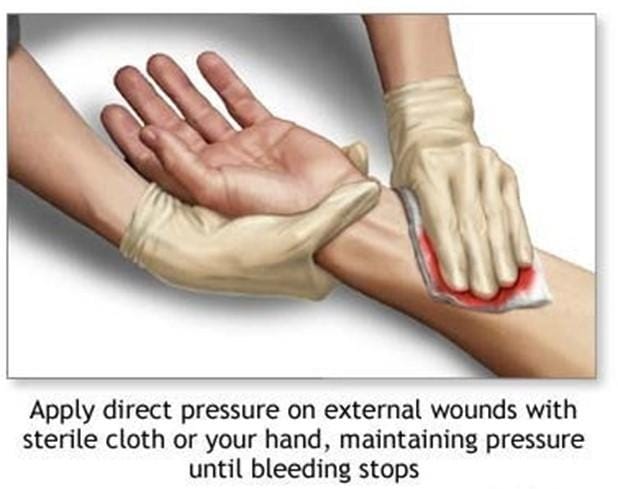
Step 2: Apply Direct Pressure
Place sterile gauze, a clean dressing, or a clean cloth over the bleeding wound and apply firm, continuous pressure. Maintain pressure until bleeding stops or emergency personnel take over.
If blood soaks through the dressing, maintain pressure rather than repeatedly removing it.
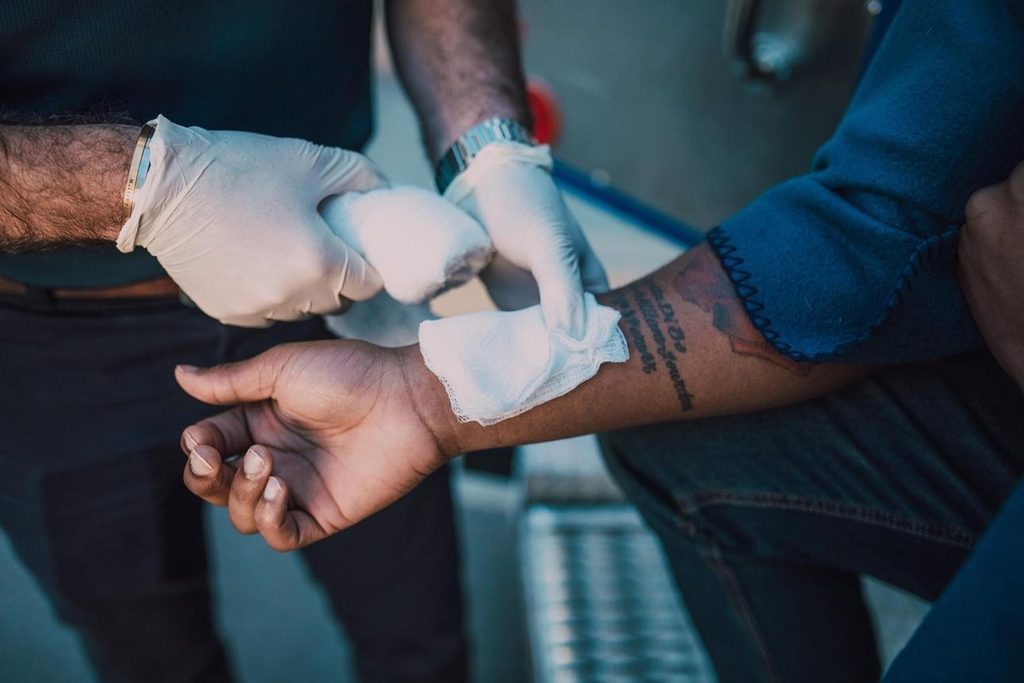
Step 3: Secure the Dressing
Once bleeding is controlled, apply a suitable bandage to hold the dressing in place. Avoid wrapping it so tightly that circulation is restricted. Continue monitoring for renewed bleeding.
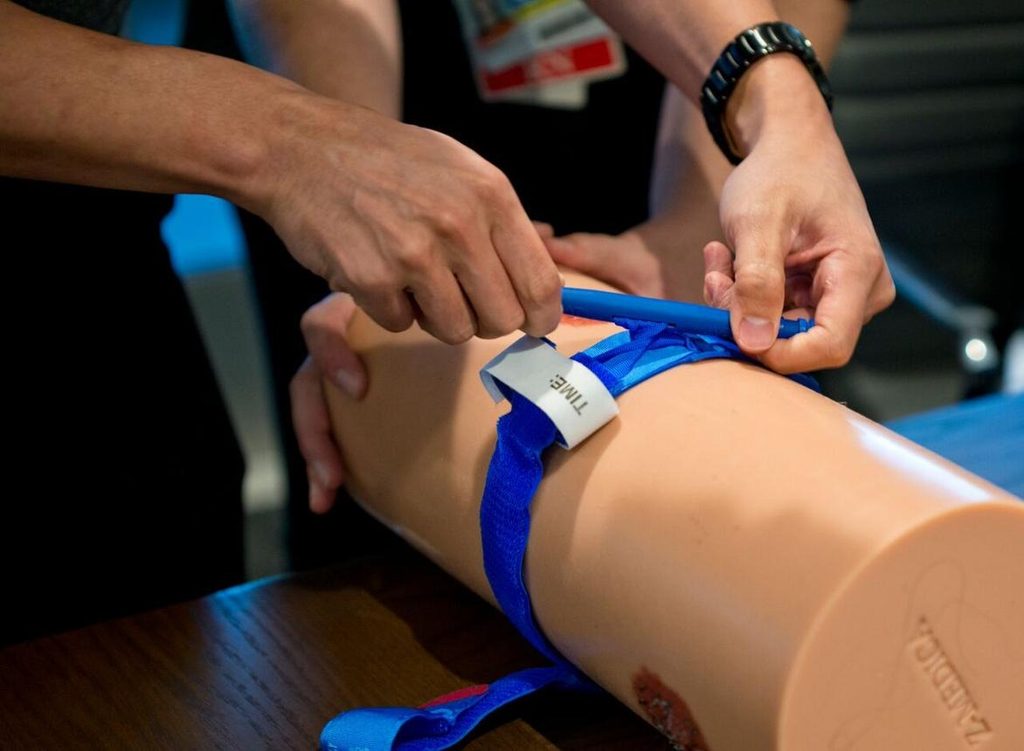
Step 4: Control Life-Threatening Limb Bleeding
For severe bleeding from an arm or leg, a manufactured tourniquet may be necessary. A trained responder should apply it according to recognized first aid guidance and the device instructions.
Do not loosen or remove an applied tourniquet unless directed by qualified medical personnel. Record the application time if possible.

Step 5: Monitor and Arrange Medical Assistance
For serious bleeding, call emergency services immediately. Keep the injured person still and monitor responsiveness and breathing.
If the person becomes unresponsive and is not breathing normally, begin CPR and use an AED as directed by your training and emergency dispatcher.
What Should You Avoid When Treating Bleeding?
Incorrect first aid can worsen an injury or delay necessary medical treatment.
- Do not remove an object deeply embedded in a wound. Apply pressure around it and stabilize it until medical help arrives.
- Do not repeatedly lift dressings to check whether severe bleeding has stopped.
- Do not apply substances such as powders, oils, or home remedies to serious wounds.
- Do not attempt to remove an applied tourniquet without appropriate medical direction.
- Do not delay calling emergency services for life-threatening bleeding.
What Is Shock in First Aid?
Shock is a serious medical condition in which the circulatory system cannot deliver enough oxygen-rich blood to the body’s tissues and vital organs.
It can develop after severe bleeding, major trauma, burns, serious infections, allergic reactions, or certain heart-related emergencies.
When shock occurs due to substantial blood or fluid loss, it is known as hypovolemic shock. Severe traumatic bleeding can cause a form called hemorrhagic shock.
Without urgent medical treatment, shock can progress to organ damage, loss of consciousness, and death.
Common Signs and Symptoms of Shock
A person experiencing shock may display several warning signs.
- Pale, cool, or clammy skin.
- Rapid or weak pulse.
- Fast or shallow breathing.
- Dizziness, weakness, or fainting.
- Confusion, anxiety, or unusual restlessness.
- Nausea or vomiting.
- Extreme thirst.
- Reduced responsiveness or unconsciousness.
Symptoms vary depending on the cause and severity. Do not wait for every symptom to appear before seeking emergency medical assistance.
First Aid Treatment for Shock: What Should You Do?
Shock requires immediate professional medical care. First aid aims to support the injured person’s condition while emergency responders are on their way.
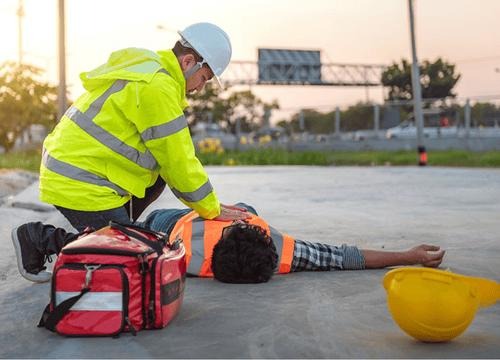
1. Call Emergency Medical Services
Treat suspected shock as a medical emergency. Call the local emergency number and explain the person’s symptoms, injuries, and location.
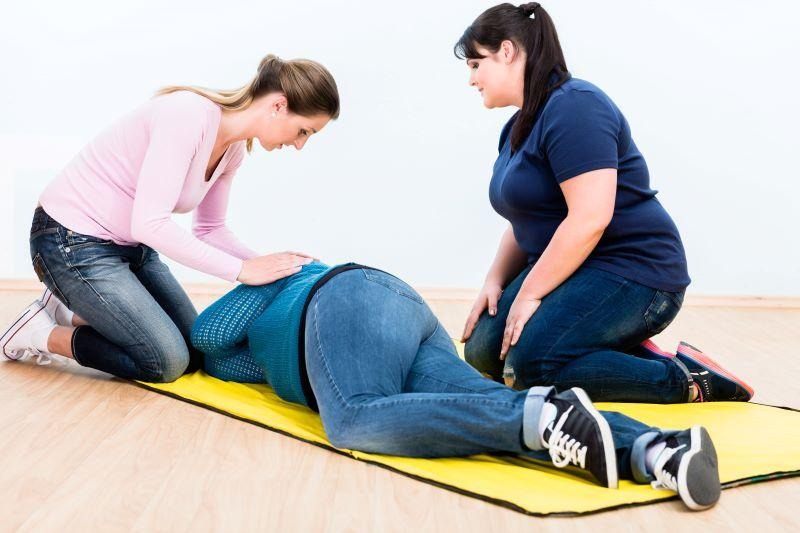
2. Help the Person Rest Safely
If appropriate, help the person lie on their back and remain still. Avoid unnecessary movement, especially if spinal, head, neck, pelvic, or other serious injuries are suspected.
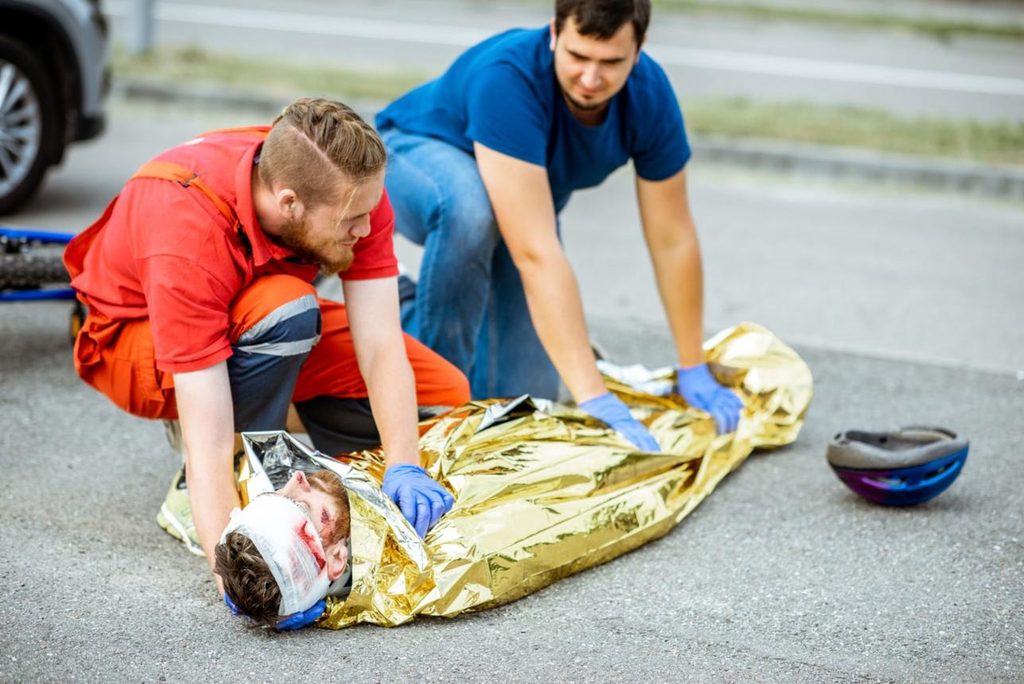
Do not automatically elevate the legs; positioning should reflect the injury, breathing, and applicable first aid guidance.
3. Maintain Body Temperature
Protect the person from excessive cold or heat. Use a blanket or suitable covering to help maintain a comfortable temperature without overheating.
4. Monitor Breathing and Responsiveness
Stay with the person and observe their breathing and level of consciousness. If they become unresponsive but are breathing normally, follow appropriate recovery-position guidance, taking suspected injuries into account.

If they are not breathing normally, begin CPR and follow dispatcher instructions.
What Should You Never Do When Someone Is in Shock?
- Do not give the person food or drinks, even if they complain of thirst.
- Do not allow them to stand, walk, or move unnecessarily.
- Do not leave them alone while waiting for medical assistance unless necessary to obtain help.
- Do not assume they are safe because they remain conscious or can speak.
- Do not delay emergency treatment while attempting to identify the precise cause of shock.
Difference Between Bleeding and Shock
Although bleeding and shock are closely related, they are not the same medical condition.
| Aspect | Bleeding | Shock |
| Definition | Loss of blood from damaged blood vessels | Inadequate blood circulation or oxygen delivery to tissues |
| Common causes | Cuts, trauma, punctures, crushing injuries | Severe blood loss, major trauma, infection, cardiac problems, allergic reactions |
| Visible signs | Blood loss may be external or concealed internally | Pale or clammy skin, rapid pulse, confusion, weakness |
| First aid priority | Control blood loss and obtain necessary medical care | Call emergency services, address the cause where possible, support breathing and circulation |
| Potential complications | Significant blood loss, tissue damage | Organ failure and potentially death |
Key point: Severe bleeding can cause shock, but shock can also develop without visible bleeding.
First Aid for Internal Bleeding
Internal bleeding occurs when blood escapes from damaged vessels but remains inside the body. It may result from falls, vehicle accidents, crushing injuries, blunt trauma, or other serious incidents.
Unlike external bleeding, internal bleeding cannot be controlled through ordinary wound dressings.
Warning Signs of Internal Bleeding
Possible signs include:
- Abdominal pain, tenderness, or swelling.
- Unexplained bruising after significant trauma.
- Dizziness, weakness, or fainting.
- Blood in vomit, urine, or stool.
- Rapid pulse and signs of shock.
- Confusion or reduced consciousness.
Some symptoms may develop gradually. A person can have serious internal bleeding without obvious external injuries.
What Should You Do?
Call emergency medical services immediately if internal bleeding is suspected. Keep the person as still as possible, monitor their breathing and responsiveness, and avoid giving food or drinks.
Do not apply pressure to the abdomen in an attempt to stop internal bleeding or move a seriously injured person unnecessarily.
Common Workplace Situations That May Cause Severe Bleeding or Shock

Manufacturing and Machinery Operations
Moving equipment, sharp tools, and mechanical components can cause deep cuts, crushing injuries, or traumatic amputations.

Construction Sites
Falls, falling objects, sharp materials, and heavy equipment can cause serious injuries involving external or internal bleeding.
Warehouses and Logistics Facilities
Forklift incidents, falling goods, loading operations, and manual handling activities can result in traumatic injuries.

Chemical and Process Industries
Equipment incidents, explosions, chemical exposure, and other process-related emergencies may produce injuries requiring urgent first aid and specialized emergency response.
These examples demonstrate why workplace first aid arrangements should reflect the hazards associated with specific jobs, equipment, and operating environments.
Why First Aid Training for Bleeding and Shock Matters in the Workplace
Providing first aid equipment alone does not ensure employees know how to respond during an emergency. Workers also need practical training, clear emergency procedures, and confidence in using appropriate first aid techniques.
1. Improves Emergency Response Readiness
Training helps employees recognize serious injuries, contact emergency services, and provide appropriate assistance while professional responders are on their way.
2. Supports Employee Protection
Employees who understand bleeding control and shock recognition can identify potentially life-threatening situations and take timely action.
3. Strengthens Workplace Safety Culture
First aid training encourages shared responsibility for emergency preparedness and reinforces the importance of reporting hazards and responding appropriately to incidents.
4. Supports Workplace Safety Management
Documented training, suitable first aid equipment, and established emergency procedures can support an organization’s broader health and safety management arrangements. Applicable legal requirements depend on the workplace and jurisdiction.
5. Helps Organizations Prepare for High-Risk Activities
Facilities involving machinery, construction work, material handling, or hazardous operations may require first aid arrangements tailored to their specific injury risks and emergency response capabilities.
Essential First Aid Equipment for Industrial Workplaces
The contents of a workplace first aid kit should be determined through an assessment of workplace hazards, workforce size, accessibility, and emergency response needs.
Common supplies may include:
- Sterile gauze pads and wound dressings.
- Roller bandages and adhesive bandages.
- Disposable protective gloves.
- Appropriate wound-cleaning supplies.
- Trauma dressings for significant bleeding.
- Commercial tourniquets where identified as necessary by the workplace risk assessment.
- Emergency blankets.
- First aid instructions and emergency contact information.
High-risk workplaces may also need additional bleeding-control equipment and trained personnel capable of using it.
First aid supplies should be accessible, routinely inspected, and replaced when used or expired.
How Aura Safety Supports Workplace First Aid Preparedness
Workplace emergency preparedness requires more than written procedures. Employees must understand how to recognise emergencies, respond safely, and coordinate assistance.
Aura Safety & Risk Consultants, through its HSE Training Academy, provides workplace first aid training as part of its safety training services.
Training can help organisations develop employee awareness of workplace injuries, emergency response priorities, and appropriate first aid practices.
Depending on the agreed training scope, relevant topics may include bleeding control, recognition of shock, CPR awareness, basic wound care, and other workplace medical emergencies.
Businesses can also strengthen their broader emergency preparedness through structured workplace safety arrangements and appropriate safety consulting services, where relevant to their operations.
Build a More Prepared Workplace with Aura Safety
Whether your organisation operates a manufacturing plant, construction site, warehouse, or corporate facility, employees should understand how to respond when a medical emergency occurs.
Contact Aura Safety & Risk Consultants to discuss workplace first aid training requirements and appropriate training arrangements for your workforce.
Conclusion
Severe bleeding and shock are medical emergencies that demand rapid recognition, appropriate first aid, and timely professional treatment.
Understanding how to apply direct pressure, identify life-threatening blood loss, recognize shock symptoms, and contact emergency services can make a meaningful difference during workplace incidents.
For employers, these skills should form part of a wider emergency preparedness approach that includes employee training, accessible first aid supplies, clear response procedures, and regular reviews of workplace risks.
Workplace safety begins with preparation, and effective first aid training helps turn that preparation into practical emergency response capability.
Frequently Asked Questions About First Aid for Bleeding and Shock
Apply firm, continuous direct pressure to the wound using sterile gauze or a clean cloth. Call emergency services immediately for life-threatening bleeding. For severe limb bleeding, a manufactured tourniquet may be needed, with application following recognized first aid guidance.
Five common warning signs are pale or clammy skin, rapid pulse, fast breathing, dizziness or weakness, and confusion. Shock may occur even without visible bleeding and requires urgent medical attention.
Call emergency medical services immediately. Keep the person resting in a safe position, address severe external bleeding if present, and monitor breathing and responsiveness until professional assistance arrives.
Yes. Significant blood loss can reduce circulating blood volume and prevent sufficient oxygen from reaching vital organs. This may cause hemorrhagic shock, which is a life-threatening medical emergency.
No. Do not give food or drinks to a person experiencing suspected shock because they may vomit, lose consciousness, or require urgent medical procedures.
A tourniquet may be appropriate for life-threatening bleeding from an arm or leg, particularly when direct pressure is ineffective or cannot be maintained. Responders should follow recognized training and device instructions.
Industrial employees may encounter injuries involving machinery, sharp materials, falls, or heavy equipment. First aid training helps them recognize emergencies, control bleeding, communicate with emergency services, and support injured colleagues until medical help arrives.
Yes. Shock can result from internal bleeding, serious infection, severe allergic reactions, heart-related emergencies, and other conditions. Visible blood loss is not necessary for shock to occur.
