


A practical guide to recognizing sudden cardiac arrest, delivering lifesaving chest compressions, and using an automated external defibrillator during an emergency.
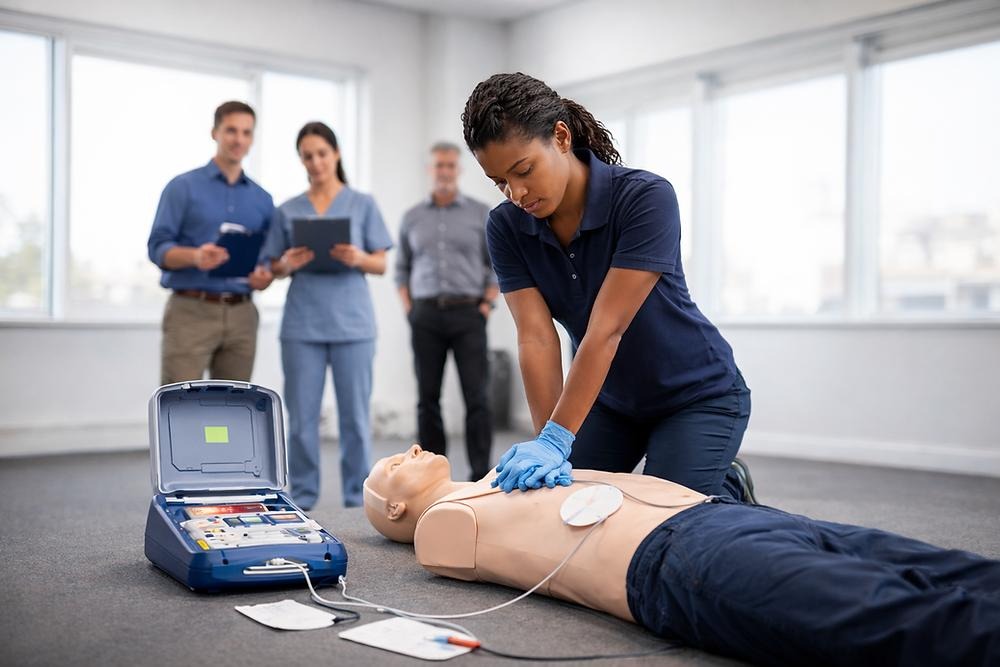
Sudden cardiac arrest can happen without warning, whether at home, in an office, on a construction site, or inside an industrial facility. When the heart suddenly stops pumping blood effectively, the brain and other vital organs are deprived of oxygen. Without immediate intervention, the consequences can be fatal within minutes.
Knowing how to perform cardiopulmonary resuscitation (CPR) and use an automated external defibrillator (AED) can make a critical difference while emergency medical services are on their way.
For businesses, cardiac emergency preparedness is an important part of workplace health and safety. Employees who receive appropriate first aid training can recognize emergencies, respond promptly, and provide potentially lifesaving assistance.
This guide explains how to identify cardiac arrest, perform CPR on an adult, use an AED safely, and improve emergency preparedness in the workplace.
What Is Sudden Cardiac Arrest?
Sudden cardiac arrest occurs when the heart unexpectedly stops pumping blood effectively, often because of an electrical disturbance that disrupts its normal rhythm.
When blood circulation stops, the person rapidly loses consciousness and stops breathing normally. Immediate CPR and, when indicated, defibrillation are essential to improve the chances of survival.
Cardiac Arrest vs. Heart Attack: Understanding the Difference
Although the terms are often confused, cardiac arrest and heart attack are not the same medical emergency.
| Cardiac arrest | Heart attack |
| The heart suddenly stops pumping blood effectively. | Blood flow to part of the heart muscle becomes blocked or severely reduced. |
| The person becomes unresponsive. | The person may remain conscious. |
| Normal breathing is absent or replaced by gasping. | Symptoms may include chest discomfort, shortness of breath, sweating, or nausea. |
| Requires immediate CPR and AED use when available. | Requires urgent emergency medical assessment and treatment. |
A heart attack can sometimes trigger cardiac arrest. Both conditions require immediate emergency medical assistance.
How to Recognize the Warning Signs of Cardiac Arrest
Recognizing cardiac arrest quickly is the first step toward providing effective assistance.
Common signs include:
- Sudden collapse or loss of consciousness.
- No response when spoken to or gently tapped.
- No normal breathing.
- Gasping or irregular, ineffective breaths, known as agonal breathing.
Important: Gasping is not normal breathing. If an adult is unresponsive and is not breathing normally, assume cardiac arrest and begin the emergency response.
Do not waste valuable time attempting to determine the exact cause of the collapse.
How to Perform CPR: Step-by-Step Guide
CPR is an emergency procedure that uses chest compressions, with rescue breaths when appropriate, to help circulate oxygenated blood to the brain and other vital organs until professional medical assistance arrives.
The following instructions apply to an adult. CPR procedures for children and infants differ and require age-appropriate training.
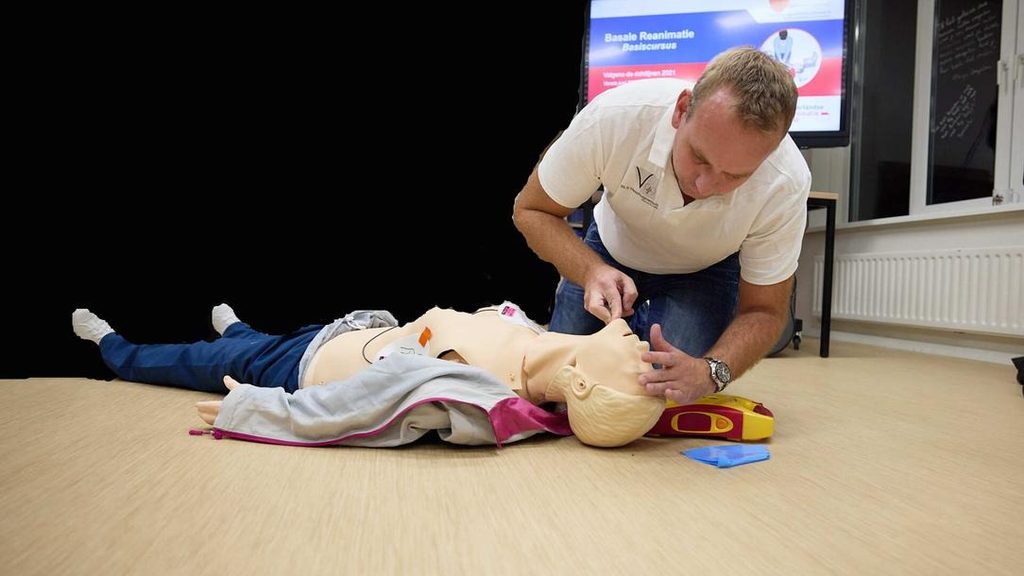
Step 1: Check the Scene and Responsiveness
Make sure the surrounding area is safe. Tap the person’s shoulders and shout, “Are you okay?” If there is no response, check for normal breathing for no more than 10 seconds.
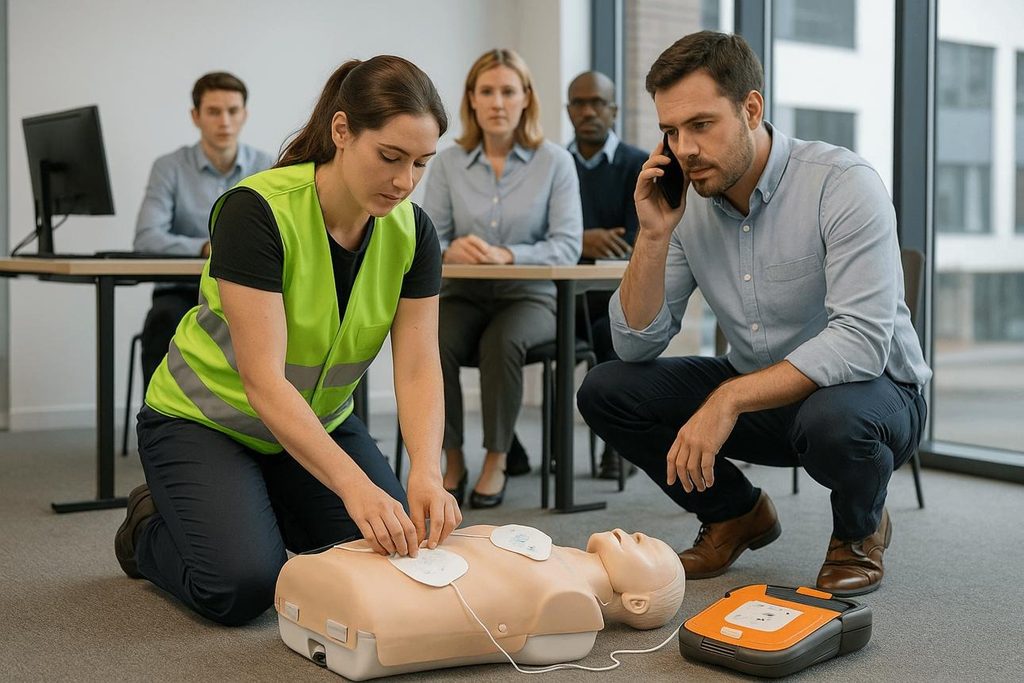
Step 2: Call Emergency Services and Get an AED
Call the local emergency number immediately, or direct someone else to call. In India, dial 112. Ask another person to retrieve the nearest AED. If you are alone, use your phone’s speaker mode and follow the dispatcher’s instructions.
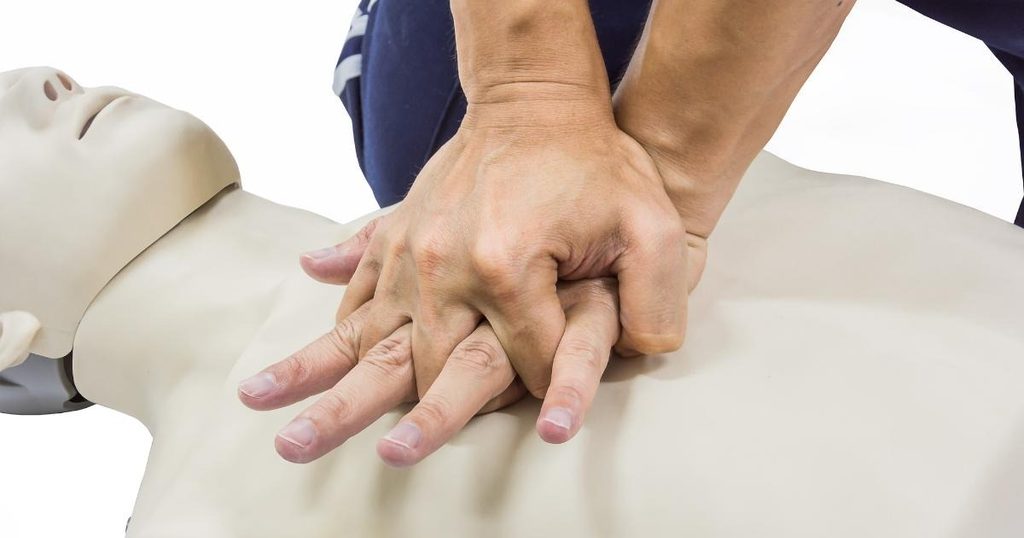
Step 3: Position Your Hands
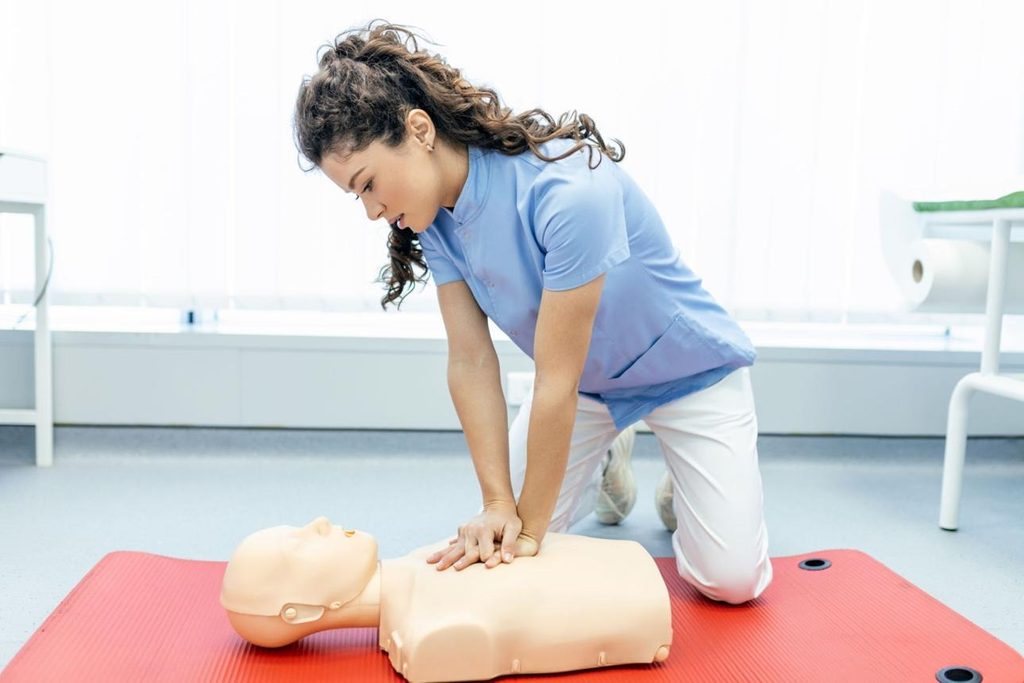
Place the person on their back on a firm, flat surface. Kneel beside the chest, place the heel of one hand in the center of the chest on the lower half of the breastbone, and position your other hand on top.
Step 4: Begin Chest Compressions
Keep your arms straight and shoulders directly above your hands. Push hard and fast at a rate of 100–120 compressions per minute, compressing the adult chest approximately 5–6 cm. Allow complete chest recoil between compressions.
Step 5: Provide Rescue Breaths If Trained
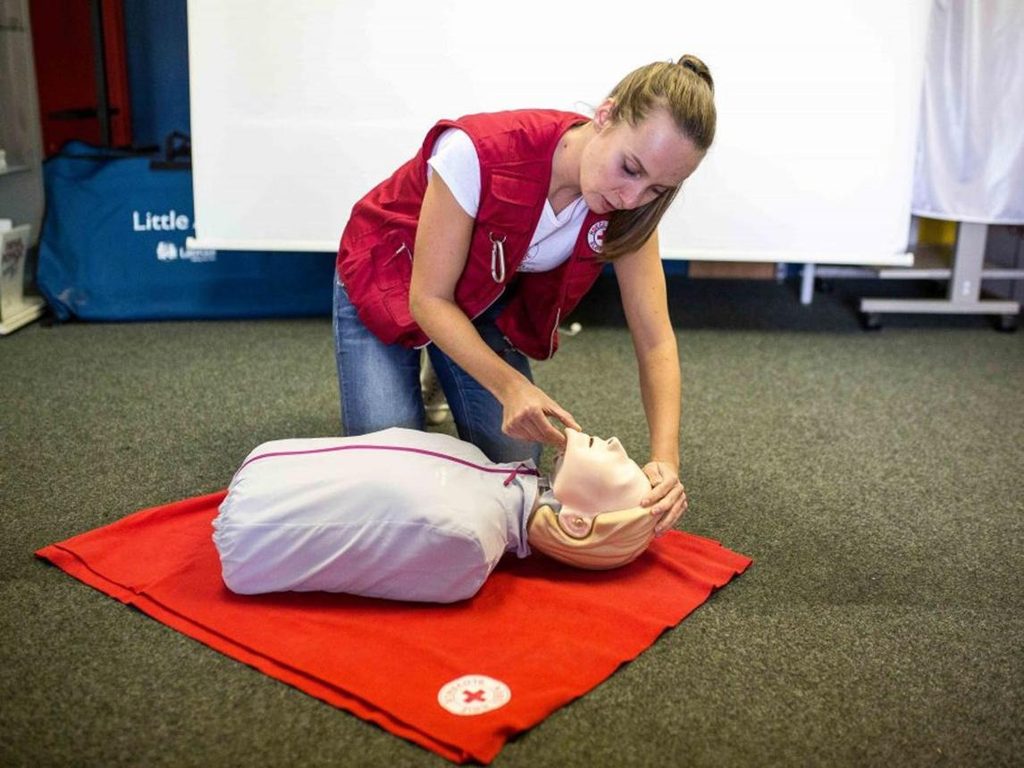
If trained and willing, give 30 chest compressions followed by 2 rescue breaths. Open the airway using a head-tilt, chin-lift maneuver and give each breath over approximately one second, enough to make the chest rise. If you are not trained or cannot provide breaths, continue hands-only CPR.
Step 6: Use an AED as Soon as Available
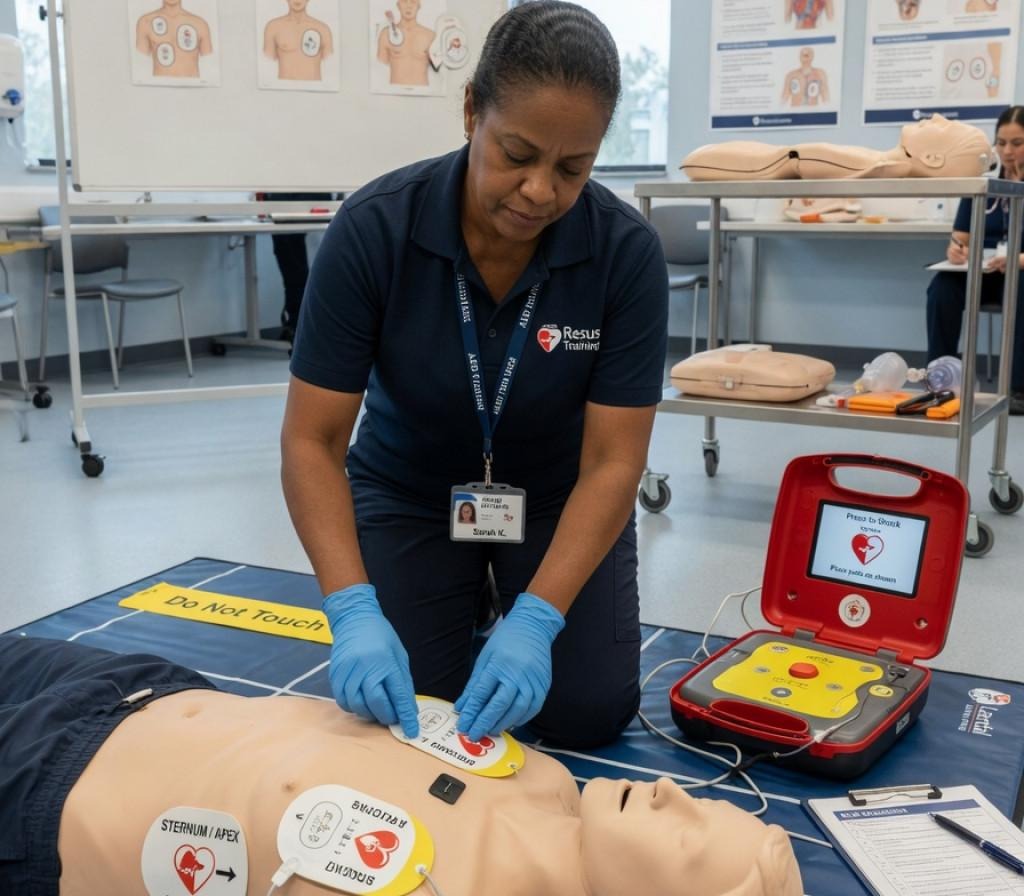
Turn on the AED and follow its voice or visual instructions. Minimize interruptions to chest compressions while preparing the device.
Continue CPR until emergency responders take over, the person shows clear signs of life and begins breathing normally, the scene becomes unsafe, or you are physically unable to continue.
What Is an AED and How Does It Work?
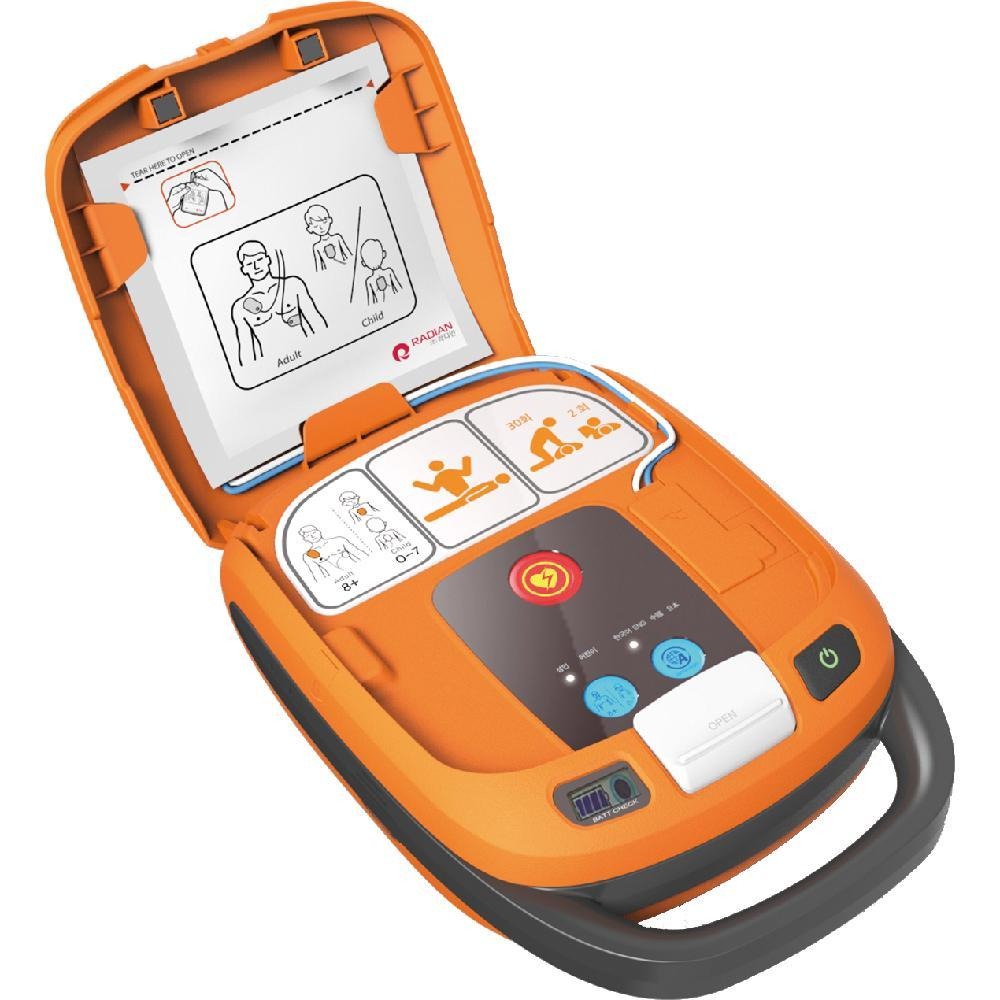
An Automated External Defibrillator (AED) is a portable medical device designed to analyze a person’s heart rhythm and deliver an electrical shock when an appropriate shockable rhythm is detected.
AEDs are designed to provide step-by-step instructions through voice prompts, visual indicators, or both, making them usable by members of the public with minimal instruction.
An AED does not deliver a shock to every person experiencing cardiac arrest. It first analyzes the heart rhythm and determines whether a shock is advised.
How to Use an AED During Cardiac Arrest
1. Turn on the AED
Open the device and switch it on if it does not activate automatically. Listen carefully to its instructions.
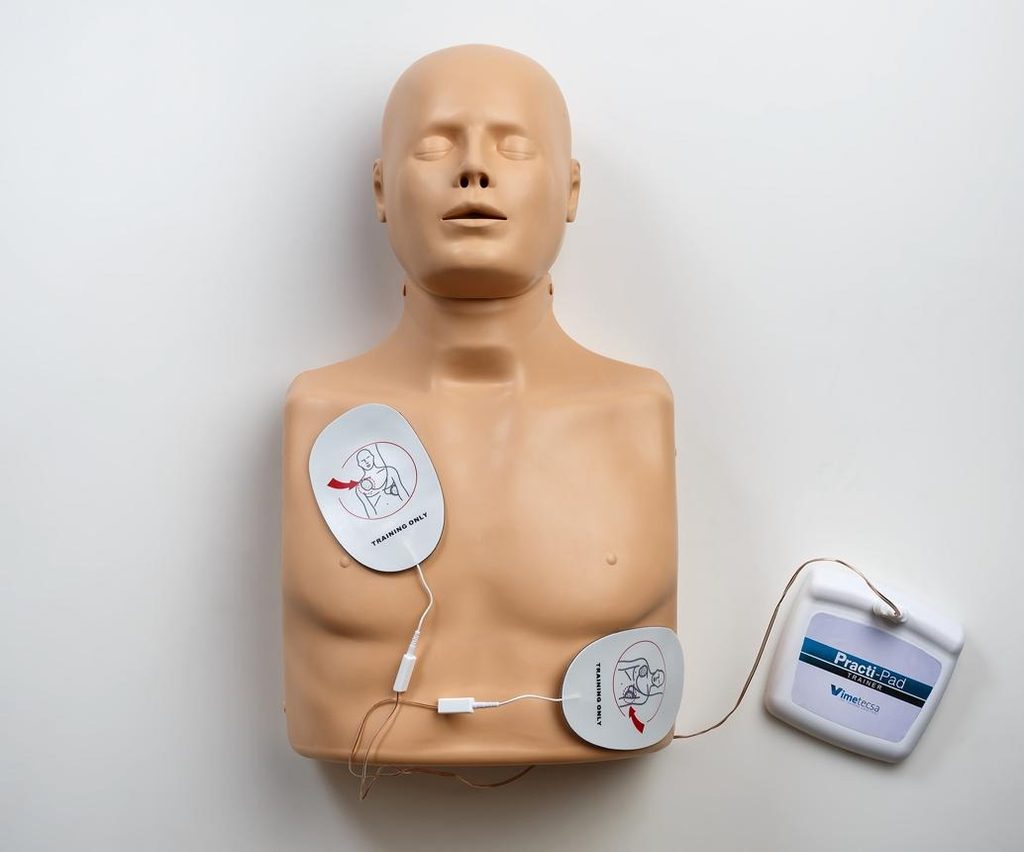
2. Attach the Electrode Pads
Expose and dry the chest if necessary. Apply the pads to bare skin as illustrated on the pads: typically one on the upper right chest and the other on the lower left side.
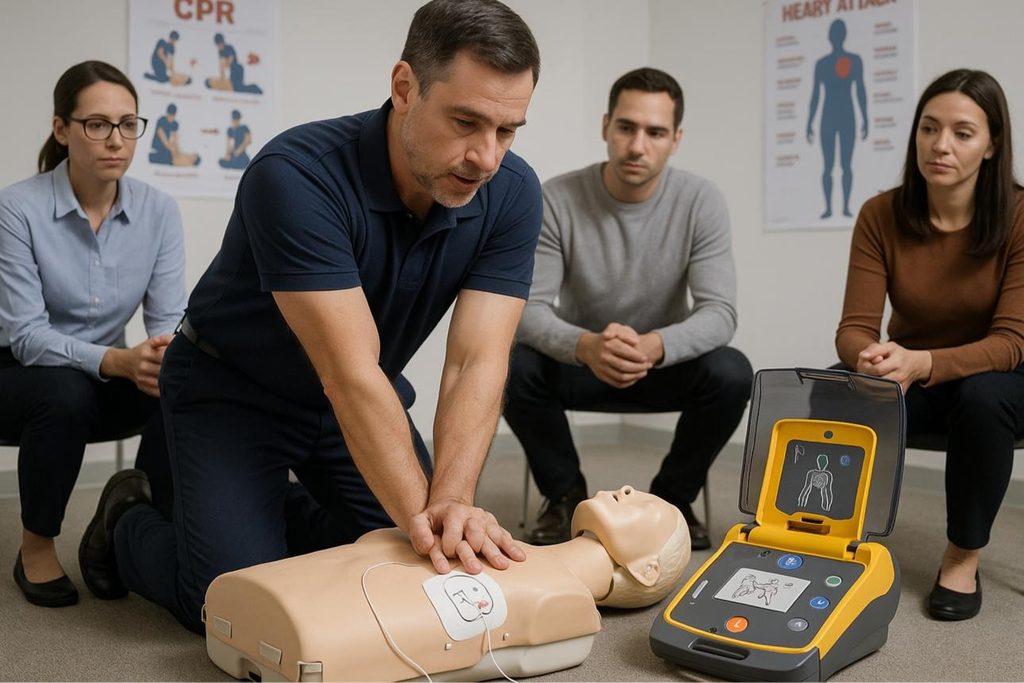
3. Allow the AED to Analyze
Ensure nobody is touching the person during rhythm analysis. Follow the AED prompts.
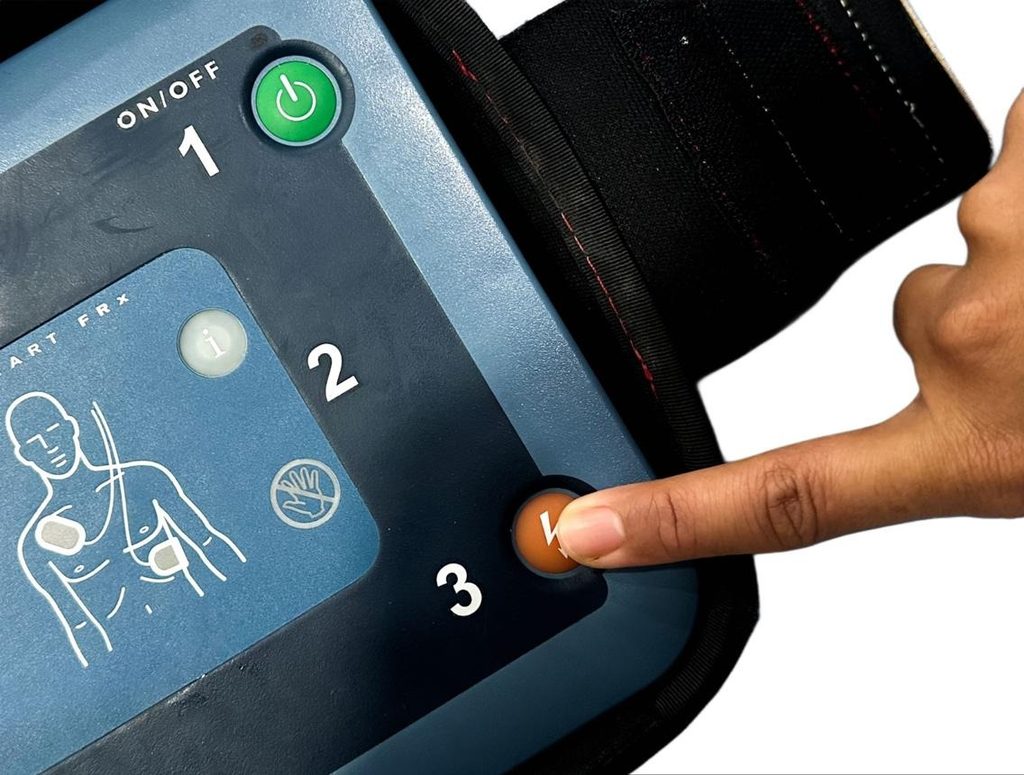
4. Deliver a Shock If Advised
Make sure everyone is clear of the person. Press the shock button if instructed, or allow the AED to deliver the shock automatically if it is a fully automatic model.
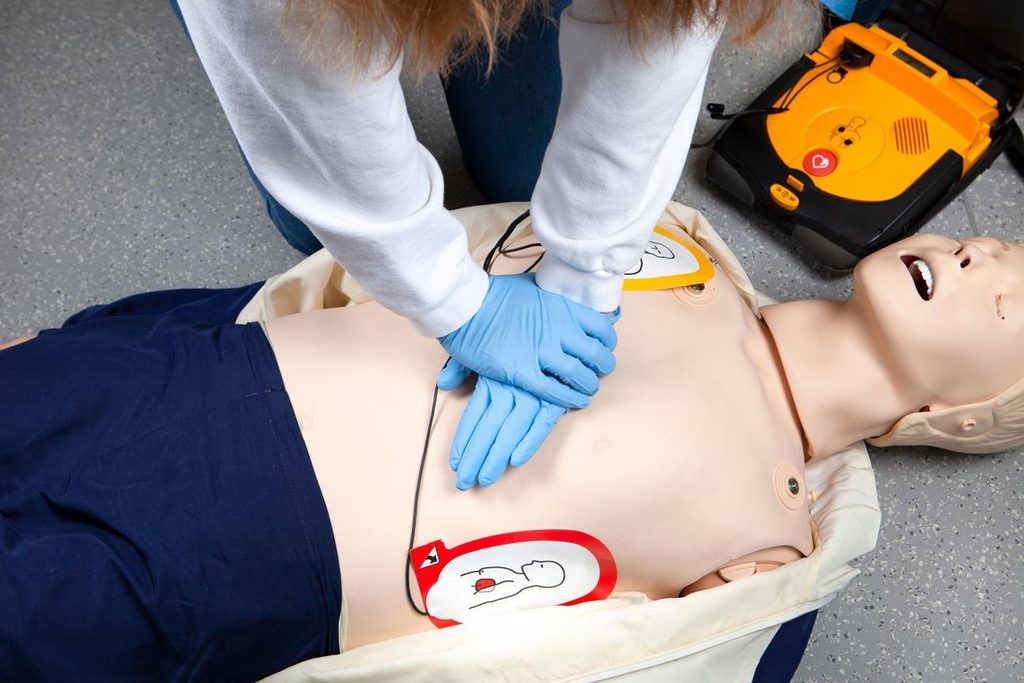
5. Resume CPR Immediately
Resume chest compressions after a shock or whenever the AED instructs you to do so. Continue following the device’s prompts until emergency medical personnel take over.
Important AED Safety Precautions
- Do not touch the person while the AED is analyzing the heart rhythm or delivering a shock.
- Dry a wet chest before applying electrode pads.
- Avoid placing pads directly over implanted medical devices or medication patches.
- Use appropriate pediatric pads or settings for children when indicated by the device instructions.
- Follow the AED’s instructions and avoid unnecessary delays in CPR.
Why Immediate CPR and AED Use Matter
During cardiac arrest, every minute without effective circulation reduces the likelihood of survival.
CPR helps maintain blood flow to vital organs, while an AED can restore a potentially effective heart rhythm in certain types of cardiac arrest.
These interventions work together as part of an organized emergency response.
The Chain of Survival
1. Recognize & call
2. Start CPR
3. Use AED
4. Advanced care
5. Recovery
The five essential stages of the cardiac arrest chain of survival.
The Chain of Survival emphasizes early recognition, emergency activation, high-quality CPR, rapid defibrillation, advanced resuscitation, and post-cardiac-arrest care and recovery.
A delay at any stage can reduce the effectiveness of the overall response.
Why CPR and AED Training Are Important for Workplace Safety
Cardiac emergencies are not limited to hospitals or healthcare settings. They can occur in offices, factories, warehouses, construction projects, commercial buildings, and industrial facilities.
For employers, preparing workers to respond to medical emergencies supports a broader workplace emergency management strategy.
1. Faster Emergency Response
Employees trained in CPR and AED use are better prepared to recognize cardiac arrest and begin appropriate action before professional responders arrive.
2. Improved Employee Protection
Workplace first aid training equips employees with practical knowledge that may help protect colleagues, contractors, visitors, and other individuals during emergencies.
3. Stronger Emergency Preparedness
CPR and AED training can be incorporated into emergency response procedures, evacuation planning, and workplace first aid arrangements.
4. Greater Confidence During Critical Situations
Practical training helps employees become familiar with emergency equipment and understand their responsibilities during a medical emergency.
5. Support for Workplace Safety Management
Including cardiac emergency response in workplace safety planning helps organizations identify preparedness gaps, allocate emergency resources, and improve response coordination.
How Organizations Can Improve Cardiac Emergency Preparedness
Having an AED on site is valuable, but equipment alone does not guarantee an effective emergency response.
Organizations should consider the following measures:
- Conduct a workplace emergency needs assessment: Review workforce size, site layout, medical response times, and operational hazards.
- Provide practical CPR and AED training: Train designated first aid responders and other relevant employees.
- Ensure AED accessibility: Position devices where they can be reached quickly and provide clear signage.
- Inspect and maintain equipment: Check batteries, electrode pad expiry dates, and device readiness according to manufacturer instructions.
- Establish emergency communication procedures: Ensure employees know how to contact emergency services and alert internal responders.
- Conduct emergency response drills: Practice communication, AED retrieval, CPR coordination, and handover to emergency responders.
- Review procedures regularly: Update emergency arrangements when facilities, staffing, or workplace conditions change.
These measures help organizations develop a more coordinated and practical response to sudden cardiac arrest.
Common Mistakes to Avoid During CPR and AED Use
Even with good intentions, certain actions can delay lifesaving assistance.
| Common mistake | Recommended action |
| Waiting too long to begin CPR | Begin compressions promptly when an adult is unresponsive and not breathing normally. |
| Confusing gasping with normal breathing | Treat abnormal gasping as a possible sign of cardiac arrest. |
| Performing shallow or slow compressions | Maintain the recommended compression depth and rate. |
| Interrupting compressions unnecessarily | Minimize pauses and follow AED instructions. |
| Delaying AED use | Apply the AED as soon as it becomes available. |
| Touching the person during AED analysis | Ensure everyone stands clear when instructed. |
| Stopping CPR because no shock is advised | Resume CPR according to AED prompts. |
CPR and AED Training with Aura Safety
Effective cardiac emergency response requires more than knowing the theoretical steps. Practical training helps employees understand how to recognize emergencies, perform chest compressions, operate emergency equipment, and coordinate assistance.
Through the Aura HSE Training Academy, Aura Safety & Risk Consultants supports organizations in developing workplace health, safety, and emergency preparedness capabilities.
CPR and AED awareness can form part of a broader workplace first aid training program, alongside emergency response procedures and employee safety awareness.
Organizations planning training should confirm the practical exercises, instructor qualifications, certification arrangements, and AED equipment included in the proposed training scope.
For businesses seeking to strengthen their workplace emergency preparedness, structured first aid training can help employees respond more confidently and effectively when every second matters.
Prepare Your Workforce for Medical Emergencies
Strengthen workplace first aid awareness and emergency response readiness with appropriate safety training for your organization.
Conclusion
Sudden cardiac arrest is a time-critical medical emergency, but immediate action can improve a person’s chance of survival.
Recognizing the warning signs, calling emergency services, starting high-quality CPR, and using an AED promptly are essential skills that can make a lifesaving difference.
For organizations, investing in workplace first aid awareness, practical training, accessible emergency equipment, and clear response procedures helps create a safer and better-prepared working environment.
Being prepared before an emergency occurs is one of the most important steps toward an effective response.
Related Article
First Aid for Bleeding and Treatment for Shock
Guide First Aid Training For Employees
Frequently Asked Questions About CPR and AED
Check that the scene is safe, assess responsiveness and normal breathing, and call emergency services. If the adult is unresponsive and not breathing normally, begin CPR and arrange for an AED immediately.
Yes. Untrained bystanders can perform hands-only CPR by delivering continuous chest compressions at 100–120 compressions per minute. Emergency dispatchers can provide instructions over the phone.
The recommended rate is 100–120 chest compressions per minute, with a compression depth of approximately 5–6 cm and complete chest recoil between compressions.
Yes. AEDs are designed for use by members of the public and provide instructions that guide the rescuer through rhythm analysis and defibrillation when necessary.
An AED analyzes the heart rhythm and delivers or advises a shock only when it identifies a shockable rhythm. A person in cardiac arrest may still require CPR even if no shock is advised.
CPR uses chest compressions, and sometimes rescue breaths, to help maintain circulation. An AED analyzes the heart rhythm and can deliver an electrical shock when indicated. Both are important components of cardiac arrest response.
Organizations should follow the refresher requirements of their training provider, applicable workplace requirements, and internal emergency response procedures. Periodic practice helps employees maintain practical skills.
AED requirements depend on applicable regulations and workplace circumstances. Organizations should assess workforce size, emergency medical service response times, site accessibility, and other relevant risk factors when deciding on AED provision.
CPR primarily helps maintain blood circulation during cardiac arrest. It does not usually restart the heart by itself. Defibrillation, when indicated, and advanced medical treatment may be needed to restore effective heart function.
Continue until emergency professionals take over, the person begins breathing normally and shows clear signs of life, the environment becomes unsafe, or you are physically unable to continue. Follow emergency dispatcher and AED instructions.
