


Safety Consultant in the United Kingdom

Engineered Process Safety, DSEAR Assessments, and Strategic Health & Safety Solutions for UK Industry

Operating an industrial asset within the United Kingdom demands rigorous adherence to an evolving regulatory framework focused on goal-setting and evidence-based risk reduction. From the North Sea energy infrastructure to the manufacturing corridors of the Midlands, corporate leaders must actively demonstrate that operational risks are managed to a level that is “reasonably practicable.”

As elite safety consultants, we deliver advanced process safety engineering, technical risk management, and regulatory compliance services across the UK. We partner with operations directors, engineering managers, and corporate HSE teams to navigate strict regulatory landscapes, protecting your workforce, asset investments, and corporate reputation.

Service Overview

Our technical consultancy transforms complex health and safety obligations into structured, high-performing operational practices. We provide comprehensive safety engineering services designed to identify systemic vulnerabilities and implement robust control architectures.

  • COMAH Compliance & Safety Cases: End-to-end support for Upper and Lower Tier Control of Major Accident Hazards (COMAH) sites, including safety report preparation and predictive risk modeling.
  • Process Safety Excellence: Expertly facilitated HAZOP, HAZID, and Layer of Protection Analysis (LOPA) to validate process barrier integrity.
  • DSEAR & Hazardous Area Classification: Technical assessments to ensure full compliance with the Dangerous Substances and Explosive Atmospheres Regulations (DSEAR).
  • Fire Engineering & Hydraulic Calculations: Complete fire risk assessments, fire water demand calculations, and specialized hydraulic modeling for industrial installations.

Why the Service Matters

In the UK, the regulatory framework places the burden of proof squarely on the duty holder. An inadequate safety system results in heavy financial exposure under the Health and Safety Executive’s (HSE) Fee for Fault (FFF) scheme, potential criminal prosecution, and significant operational disruption. Implementing professional safety engineering safeguards your people and protects your organization from catastrophic financial losses and severe reputational damage.

Key Challenges Solved

  • Demonstrating ALARP: Providing the quantitative and qualitative data required to prove to the HSE that risks have been reduced to “As Low As Is Reasonably Practicable.”
  • Managing Major Accident Hazards: Identifying low-frequency, high-consequence event pathways in complex chemical, storage, or manufacturing environments.
  • Optimizing Fire Protection Investments: Replacing guesswork with highly accurate fire load and hydraulic calculations to ensure fire safety infrastructure is correctly sized and cost-effective.
  • Legacy System Upgrades: Evaluating and upgrading older process plant control architectures to meet modern functional safety standards (IEC 61511).

What are the Features & Capabilities

Our UK consulting practice leverages advanced engineering methodologies to deliver actionable risk insights:

  • Quantitative Risk Assessment (QRA): High-level mathematical hazard modeling to determine exact individual and societal risk profiles.
  • Bow-Tie Risk Modeling: Visually mapping the relationship between hazard causes, preventive barriers, consequences, and mitigating controls for high-level executive clarity.
  • Safety Critical Element (SCE) Identification: Defining and establishing performance standards for components whose failure could cause or contribute substantially to a major accident.

What are the benefits?

  • Regulatory Assurance: Complete confidence during interventions by the HSE or the Environment Agency (the COMAH Competent Authority).
  • Asset Protection: Minimized risk of catastrophic asset loss, chemical release, or prolonged facility downtime.
  • Optimized Insurance Costs: Comprehensive risk inspection surveys provide insurers with the data needed to offer favorable underwriting terms.
  • Enhanced Safety Culture: Shifting organizational behavior from passive compliance to proactive, high-reliability safety execution.

What is the process / methodology?

We apply a rigorous, engineering-driven framework tailored to the specific operational realities of UK industrial sites:

  1. Baseline Regulatory Review: Assessing current compliance postures against the Health and Safety at Work Act and specific relevant statutory instruments.
  2. Rigorous Hazard Analysis: Executing highly detailed HAZOP or DSEAR workshops utilizing industry-recognized software and methodology.
  3. Barrier Design & Verification: Defining technical performance standards and safety functions (SIL) to intercept potential major accident pathways.
  4. Operational Integration: Embedding Management of Change (MOC) workflows and pre-startup safety protocols into daily engineering practices.
  5. Performance Auditing: Delivering objective, evidence-based compliance audits to ensure your safety barriers remain robust over time.

What Industries we served

  • Oil & Gas and Petrochemicals: Top-tier process safety engineering for onshore terminals, refineries, and chemical manufacturing assets.
  • Power Generation & Renewables: Safety risk consulting for thermal plants, wind infrastructure, and emerging carbon capture and hydrogen projects.
  • Logistics, Warehousing & Bulk Storage: DSEAR zoning, comprehensive fire safety management, and large-scale traffic risk mitigation.
  • Heavy Manufacturing & Aerospace: Machine guarding validation, hazardous substance control, and site-wide safety culture development.

What are the Compliance & standards?

Our consultancy ensures absolute alignment with all major UK statutory instruments and international engineering frameworks:

  • UK Legislation: The Health and Safety at Work etc. Act 1974, COMAH Regulations 2015, DSEAR 2002, and the Management of Health and Safety at Work Regulations 1999.
  • Engineering Standards: BS EN 61508/61511 (Functional Safety), BS EN 60079 (Explosive Atmospheres), and relevant Institution of Chemical Engineers (IChemE) guidelines.
  • Management Frameworks: ISO 45001 (Occupational Health & Safety) and ISO 14001 (Environmental Management).

Why Choose Aura Safety?

We distinguish ourselves by combining highly technical engineering capabilities with a deep commercial understanding of UK safety law. We speak the language of plant engineers, corporate compliance directors, and regulatory inspectors alike. Our data-driven safety frameworks are designed to seamlessly integrate into your existing operations, proving that high safety standards actively support high operational efficiency.

Send us a message

Need more help?

+91 99994 02106

What we offer

Our Services

Identify, evaluate, and control process hazards with expert risk assessments, ensuring safe, reliable, and compliant industrial operations.
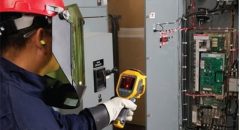
Electrical Safety Services

Identify, evaluate, and control process hazards with expert risk assessments, ensuring safe, reliable, and compliant industrial operations.

Construction Safety Services

Implement site safety plans, audits, and training to prevent accidents, ensuring safer construction environments and regulatory compliance.

Fire Protection System
Designing of Fire Protection System

Design, engineer, and audit fire protection systems ensuring reliable performance, asset safety, and adherence to national safety standards.

Aura HSE Training Academy

Empowering workforce with certified HSE, fire, and industrial safety training programs for skill development and regulatory competence.

VR Content Development Services

Create immersive, interactive VR safety training modules for realistic learning experiences in hazard recognition and emergency preparedness.

How it works

Industry Consultation

Project Scoping & Industry Brief

Service Selection

Site Visit & Inspection

Audit & Analysis

Report Submission & Discussion

Frequently Ask Question

If your workplace handles, stores, or processes flammable substances, gases, vapors, or explosive dusts, you are legally required under DSEAR to assess the risks, classify hazardous areas into zones, and implement appropriate ignition control measures.

We manage the entire transition lifecycle: conducting comprehensive safety gap analyses, developing the formal Major Accident Prevention Policy (MAPP), executing necessary advanced QRAs, and compiling the extensive Safety Report required by the Competent Authority.

Layer of Protection Analysis (LOPA) is a simplified risk assessment methodology that uses rules of thumb to evaluate the risk of a hazard scenario and determine if the existing independent protection layers (such as alarms, relief valves, or interlocks) are sufficient to meet your corporate risk tolerance targets.
Get free a quote