

Specialist process safety consultancy for industrial hazard identification, risk assessment, and safer operations across the United Arab Emirates.
Industrial facilities in the UAE operate complex processes involving hazardous chemicals, flammable materials, high-pressure equipment, and critical control systems. Managing these hazards requires a structured approach to process safety that considers both local regulatory obligations and internationally recognized engineering practices.
Aura Safety & Risk Consultants provides process safety consultancy services to help organizations identify major accident hazards, evaluate existing safeguards, and make informed risk management decisions.
Our technical services include Hazard and Operability Studies (HAZOP), Hazard Identification (HAZID), Safety Integrity Level (SIL) studies, Quantitative Risk Assessment (QRA), Process Safety Management (PSM), and related risk assessment methodologies.
Whether your organization is planning a new facility, modifying an existing process, or reviewing operational risks, we help establish a clearer understanding of potential hazards and the measures needed to manage them.
Process safety focuses on preventing major incidents caused by the loss of containment of hazardous materials or the uncontrolled release of energy. These events may lead to fires, explosions, toxic releases, equipment damage, environmental harm, and operational disruption.
Unlike general workplace safety, which often focuses on occupational injuries and day-to-day working conditions, process safety examines the engineering systems, operating conditions, and management practices that prevent high-consequence industrial incidents.
A process safety consultant supports organizations by:
For UAE industrial operators, these assessments can also support project reviews, internal risk governance, and the preparation of technical documentation required by relevant stakeholders.
Effective process safety management in the UAE requires an understanding of two distinct considerations: applicable UAE regulatory requirements and international technical standards used to assess and manage industrial risks.
These are related, but they are not interchangeable. A technical standard may provide an accepted engineering methodology without automatically becoming a legal requirement for every facility in the UAE.
Industrial facilities in the UAE may be subject to federal legislation, emirate-level requirements, industrial-zone rules, environmental permits, and sector-specific requirements.
The applicable obligations depend on the facility’s location, activities, hazardous materials, and regulatory jurisdiction.
Federal workplace health and safety requirements
UAE employment legislation and associated occupational health and safety requirements establish duties relating to worker protection and safe working conditions. These obligations form part of the broader safety responsibilities of employers, although they should not be treated as a comprehensive process safety engineering code.
Abu Dhabi occupational safety and health framework
Facilities operating in Abu Dhabi may need to consider the Abu Dhabi Occupational Safety and Health System Framework (ADOSH-SF), where applicable. The framework provides a structured approach to occupational safety and health management, including risk management and organizational responsibilities.
Dubai and other emirate-specific requirements
Facilities in Dubai and other emirates may be subject to requirements established by relevant local authorities, industrial zones, permitting bodies, or sector regulators.
The specific requirements should be confirmed for each project rather than assuming that one set of rules applies throughout the UAE.
Project and operator requirements
Industrial owners, engineering contractors, and project stakeholders may also specify particular process safety studies, technical standards, and risk acceptance criteria through project specifications or contractual requirements.
For this reason, a process safety study should begin with a clear understanding of the facility’s regulatory context and agreed technical scope.
International standards and guidance provide established methods for identifying hazards, evaluating risk, and designing or managing protective systems.
The standards commonly considered in process safety projects include:
Standard or guidance | Relevance to process safety |
IEC 61882 | Guidance for conducting Hazard and Operability Studies (HAZOP). |
IEC 61511 | Functional safety requirements for safety instrumented systems in the process industry sector. |
IEC 61508 | General framework for the functional safety of electrical, electronic, and programmable electronic safety-related systems. |
ISO 31000 | Principles and guidance for organizational risk management. |
CCPS guidance | Technical guidance on process safety management, hazard evaluation, and major accident risk reduction. |
API standards and recommended practices | Industry-specific technical guidance relevant to particular equipment, processes, and operating activities. |
OSHA Process Safety Management requirements may also be used as a reference for management-system practices. However, OSHA PSM is a United States regulatory framework and is not automatically a legal requirement in the UAE.
The selection of standards and assessment methods should reflect the project’s hazards, applicable requirements, and technical objectives.
A facility may need to demonstrate that it meets applicable local requirements while using international engineering methodologies to evaluate specific process hazards.
For example, a project might use HAZOP to systematically identify process deviations, QRA to evaluate selected major accident scenarios, and SIL assessment methods to determine the required integrity of safety instrumented functions.
The resulting studies can provide technical evidence to support risk management decisions. They do not, by themselves, establish legal compliance or replace the approvals of relevant authorities.
Aura Safety offers a range of process safety assessment and risk management services for industrial projects and operating facilities.
A HAZOP study is a structured examination of process design and operating conditions to identify deviations that could lead to unsafe or undesirable outcomes.
The assessment reviews process parameters, potential causes, consequences, existing safeguards, and recommendations for further action.
HAZOP studies can support design reviews, process modifications, and the reassessment of existing facilities.
A HAZID study identifies potential hazards at an early stage of project development or during the review of an existing operation.
It considers hazards associated with equipment, materials, activities, interfaces, and surrounding conditions.
Early hazard identification helps project teams recognize significant risks before key engineering and operational decisions are finalized.
Safety Integrity Level (SIL) studies support the assessment of safety instrumented functions and their required risk reduction performance.
Depending on the study scope, the work may include SIL determination, SIL verification, or related functional safety assessments.
These activities help organizations establish appropriate safety performance targets and evaluate whether proposed safety instrumented functions can meet the relevant requirements.
A quantitative risk assessment (QRA) evaluates selected hazardous event scenarios using quantitative methods to estimate their likelihood and potential consequences.
QRA can support decisions concerning facility layout, risk reduction priorities, hazardous operations, and the management of major accident risks.
The methodology, assumptions, and risk criteria should be appropriate to the facility and agreed project requirements.
Process Safety Management provides a systematic approach to managing hazards associated with industrial processes throughout their operational lifecycle.
Our process safety management audit and implementation services can support the review and improvement of management practices involving hazard identification, operational controls, management of change, incident learning, and other relevant process safety elements.
The objective is to help organizations strengthen the systems and responsibilities used to manage major accident hazards.
Depending on project requirements, Aura Safety also provides:
Explore our broader process safety services.
Process safety assessment is particularly important in industries where hazardous materials, complex equipment, or high-energy processes create the potential for major incidents.
Upstream, midstream, and downstream operations require systematic assessment of hydrocarbon releases, fires, explosions, process deviations, and protective systems.
Chemical processing facilities benefit from structured hazard identification and risk assessment involving reactive materials, process conditions, containment systems, and equipment interfaces.
Liquefied natural gas and gas processing operations require consideration of flammable releases, pressure systems, cryogenic hazards, and major accident scenarios.
Power and utility facilities may require assessments of fuel handling, process equipment, control systems, and operational hazards.
Industrial manufacturing facilities can use process safety methodologies to evaluate hazardous production activities, equipment failures, and process modifications.
Facilities storing or transferring hazardous materials can benefit from assessments of containment loss, fire and explosion scenarios, transfer operations, and emergency safeguards.
Structured process safety studies help organizations identify credible hazardous scenarios and understand the effectiveness of existing safeguards before an incident occurs.
Evaluating major accident hazards helps organizations prioritize measures intended to limit harm to personnel, surrounding communities, equipment, and the environment.
Well-documented process safety assessments can support discussions with project stakeholders, technical reviewers, and relevant authorities where such studies are required.
The studies must be aligned with the applicable project and regulatory requirements.
Identifying weaknesses in process design, operating practices, and protective systems can help organizations address conditions that might otherwise contribute to unplanned shutdowns or operational disruption.
Process safety studies provide technical information that helps management and engineering teams prioritize safeguards, evaluate design options, and allocate resources according to identified risks.
Aura Safety follows a structured, project-focused approach to process safety assessments.
We review the available process information, facility characteristics, project objectives, and relevant technical requirements to define the assessment scope.
The assessment methodology is selected according to the hazards being evaluated, the project lifecycle stage, and the level of analysis required.
The study examines credible hazardous scenarios, their potential consequences, existing safeguards, and areas where additional risk reduction measures may be needed.
The assessment findings are organized into technical documentation that supports engineering review, management decisions, and action tracking.
Where included in the agreed scope, we support clarification of findings and review of recommended actions to help project teams move from assessment to implementation planning.
Selecting a process safety consultant requires consideration of technical capabilities, the suitability of assessment methods, and the consultant’s ability to communicate findings that project teams can use.
Aura Safety & Risk Consultants brings more than 10 years of business experience and a portfolio of industrial safety and process risk assessment services.
Our consultancy approach emphasises:
For UAE projects, the scope of services, applicable requirements, and delivery arrangements can be discussed during the initial consultation.
Whether you are developing a new industrial facility, reviewing an existing operation, or planning a process modification, selecting the right assessment methodology is an important step toward effective risk management.
Aura Safety & Risk Consultants can help you define the appropriate process safety study scope and identify the technical information required for your project.
+91 99994 02106
World-Wide Safety Consultation
Discuss your process, project stage, available documentation and required schedule before finalizing the study scope.

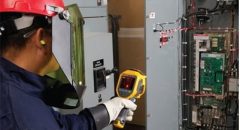
Identify, evaluate, and control process hazards with expert risk assessments, ensuring safe, reliable, and compliant industrial operations.
Identify, evaluate, and control process hazards with expert risk assessments, ensuring safe, reliable, and compliant industrial operations.

Implement site safety plans, audits, and training to prevent accidents, ensuring safer construction environments and regulatory compliance.

Design, engineer, and audit fire protection systems ensuring reliable performance, asset safety, and adherence to national safety standards.

Empowering workforce with certified HSE, fire, and industrial safety training programs for skill development and regulatory competence.

Create immersive, interactive VR safety training modules for realistic learning experiences in hazard recognition and emergency preparedness.
A process safety consultant helps industrial organizations identify major accident hazards, assess potential consequences, review existing safeguards, and recommend measures to reduce process-related risks. Services may include HAZOP, HAZID, QRA, SIL studies, and process safety management reviews.
There is no basis for assuming that HAZOP is mandatory for every industrial facility across the UAE. The need for a HAZOP study depends on the applicable regulatory requirements, project specifications, facility hazards, and technical risk assessment needs.
HAZOP is primarily a structured qualitative method used to identify process deviations, their causes, consequences, and safeguards. QRA uses quantitative methods to estimate the likelihood and consequences of selected hazardous events. The two methods serve different purposes and can complement each other.
IEC 61511 is an internationally recognized functional safety standard for safety instrumented systems in the process industries. Its applicability to a UAE facility depends on relevant regulatory, contractual, project, and technical requirements. It should not automatically be described as UAE law.
Process safety assessments may be appropriate during project concept development, engineering design, before startup, following significant process modifications, and during periodic operational risk reviews. The timing and type of assessment depend on the facility and its requirements.
No. Different methodologies answer different risk management questions. For example, HAZOP identifies process deviations, QRA estimates selected risk scenarios, and SIL studies address safety instrumented functions. A project may require several complementary assessments.
You can contact Aura Safety with details of your facility, project stage, industrial process, and required assessment. The team can discuss the technical scope and the information needed to prepare a proposal.