

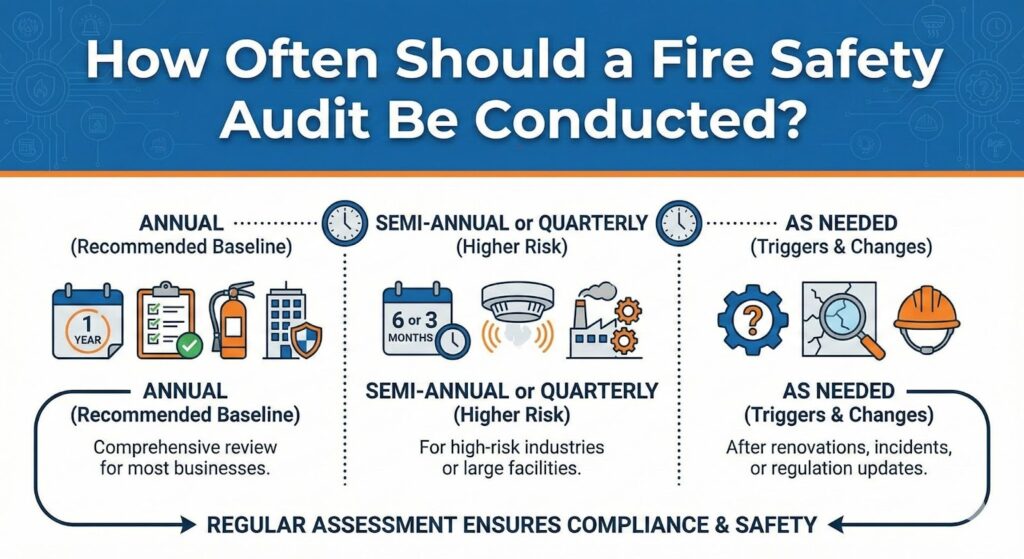
Fire safety audit frequency depends on legal requirements, risk level, and building use. This guide explains standard intervals, triggers, and best practices.
Fire Safety Audit Frequency Guidelines
Standard Audit Frequency by Regulation and Best Practice
Most fire safety frameworks require audits at regular intervals to confirm systems, procedures, and controls remain effective. Annual audits are widely accepted as a baseline, with higher-risk environments reviewed more often.
Minimum Legal Requirements by Jurisdiction
Local fire codes and authorities having jurisdiction define the minimum audit frequency. These requirements typically set the lowest acceptable standard and vary by country, state, or municipality.
Industry-Recommended Audit Intervals
Industry bodies and insurers often recommend more frequent audits than the legal minimum, especially for complex buildings, high occupancy, or hazardous operations.
Factors That Determine Fire Safety Audit Frequency
Building Type and Occupancy Risk Level
Fire safety audit frequency increases as occupant risk increases. Buildings with high occupant density, limited mobility, or public access require closer monitoring because evacuation complexity and life-safety impact are higher.
Business Size, Operations, and Fire Load
Larger businesses and those handling flammable materials, heat-producing equipment, or combustible storage face higher fire loads. These conditions increase ignition probability and fire spread potential, justifying shorter audit cycles.
Age, Condition, and Complexity of Fire Systems
Older buildings or facilities with complex fire detection, alarm, and suppression systems require more frequent audits. System aging, retrofits, and integration issues raise failure risk if not regularly reviewed.
A practical rule is that audit frequency should rise with operational risk, system complexity, and potential consequences of failure. Low-risk offices may rely on annual audits, while high-risk or mission-critical sites often implement semi-annual or quarterly reviews to maintain reliable fire protection and compliance.
Fire Safety Audit Frequency by Property Type
Commercial and Office Buildings
Commercial offices typically undergo annual fire safety audits, with interim inspections for alarms, extinguishers, and evacuation routes throughout the year.
Industrial and Manufacturing Facilities
Industrial facilities often require more frequent audits due to hazardous processes, machinery, and materials. Semi-annual or quarterly audits are common in higher-risk operations.
Residential and Multi-Unit Housing
Multi-unit residential buildings generally follow annual audits, with routine checks on common-area systems and clear evacuation pathways.
Healthcare, Education, and Public Buildings
Hospitals, schools, and public venues require stricter audit schedules due to vulnerable occupants and high occupancy, often combining annual audits with frequent internal inspections.
Regulatory Compliance and Legal Obligations
Fire Code and Authority Having Jurisdiction Requirements
Fire codes specify audit scope, frequency, and documentation standards. Compliance is enforced by local authorities through inspections and certifications.
Insurance and Risk Management Requirements
Insurers may mandate specific audit intervals as a condition of coverage. Failure to meet these requirements can affect claims or premiums.
Consequences of Non-Compliance
Non-compliance can lead to fines, operational shutdowns, increased liability, and heightened risk to life and property during a fire event.
Internal vs Third-Party Fire Safety Audits
Internal Audit Frequency and Scope
Internal audits are typically conducted more frequently and focus on day-to-day compliance, housekeeping, and procedural checks.
Independent Fire Safety Audit Scheduling
Third-party audits provide independent verification and are usually scheduled annually or as required by regulators or insurers.
When Third-Party Audits Are Mandatory
Third-party audits are often mandatory for high-risk facilities, public buildings, or when required by law, insurance, or certification schemes.
Triggers for Additional or Unscheduled Fire Safety Audits
After Renovations or Change of Use
Building modifications or changes in occupancy can alter fire risk, requiring immediate reassessment.
Following Fire Incidents or Near Misses
Any fire event or near miss should trigger an audit to identify root causes and prevent recurrence.
Updates to Fire Codes or Safety Standards
Regulatory updates may introduce new requirements, making additional audits necessary to confirm compliance.
Fire Safety Audit Process and What Is Reviewed
Fire Detection, Alarm, and Suppression Systems
Audits verify that alarms, sprinklers, and suppression systems are installed correctly, maintained, and fully operational.
Emergency Exits, Signage, and Evacuation Plans
Clear, accessible exits and accurate evacuation plans are reviewed to ensure safe and timely egress.
Staff Training and Fire Safety Documentation
Auditors assess training records, drills, and documentation to confirm staff preparedness and procedural compliance.
Choosing a Fire Safety Audit Provider
Certified Fire Safety Professionals and Credentials
Qualified auditors hold recognized fire safety certifications and understand applicable codes and standards.
Local Fire Safety Audit Services
Local providers are familiar with regional regulations and authority expectations, supporting smoother compliance.
Audit Reporting and Ongoing Compliance Support
Effective providers deliver clear reports, corrective action guidance, and ongoing support to maintain compliance between audits.
FAQs
How often should a fire safety audit be conducted?
Most buildings require at least an annual fire safety audit, with higher-risk properties audited more frequently.
Are fire safety audits legally required?
Yes, most jurisdictions mandate fire safety audits under local fire codes and regulations.
Can internal audits replace third-party fire safety audits?
Internal audits support compliance but usually cannot replace mandatory independent audits.
Do renovations affect fire safety audit frequency?
Yes, renovations or changes in use typically require an additional audit.
Who is responsible for scheduling fire safety audits?
The building owner or operator is generally responsible for ensuring audits are conducted.
What happens if a fire safety audit is missed?
Missing audits can lead to regulatory penalties, insurance issues, and increased fire risk.