

Learn how fire safety audits help businesses meet legal requirements, reduce risks, and protect assets through structured safety processes.
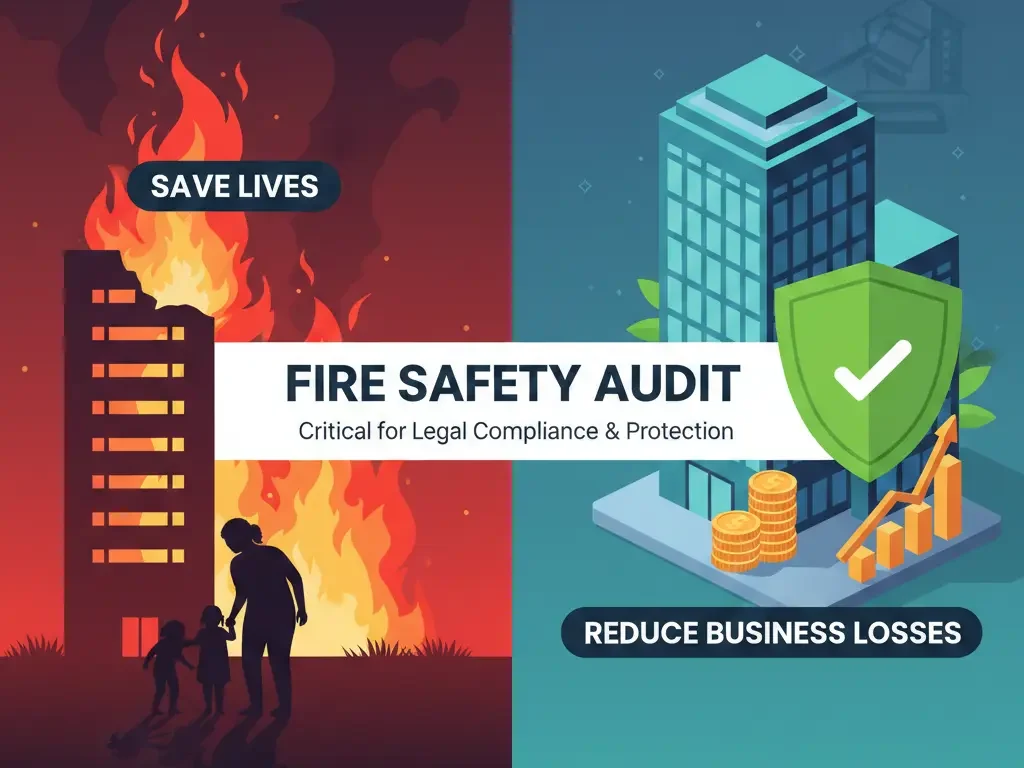
What Fire Safety Audits Are
A fire safety audit is a systematic review of a building’s fire prevention measures, safety systems, and emergency procedures. It evaluates hazards, ensures compliance with codes, and verifies operational readiness of fire protection systems.
Audits assess overall compliance and effectiveness of fire safety programs. Inspections are routine checks of equipment and systems. Risk assessments identify potential fire hazards and estimate likelihood and impact. Together, they provide a comprehensive safety overview.
Key components include site walkthroughs, system testing, documentation review, staff interviews, and emergency plan evaluation. Audits also examine fire alarms, sprinklers, extinguishers, evacuation routes, and training programs to identify gaps.
Legal & Regulatory Compliance Imperatives
Businesses must comply with national and local regulations, including fire safety codes, building codes, and standards such as the National Building Code (NBC) and NFPA guidelines. Compliance ensures minimum safety levels and legal protection.
Requirements vary by jurisdiction, covering occupancy limits, emergency exits, fire suppression systems, signage, and maintenance protocols. Understanding local mandates ensures audits capture all legal obligations.
Comprehensive records, including inspection reports, maintenance logs, test certificates, and staff training documentation, serve as evidence for regulators, insurers, and internal accountability.
Consequences of Non‑Compliance
Failure to comply can result in fines, business closure, or regulatory sanctions. Authorities may issue stop-work orders or suspend operations until deficiencies are corrected.
Non-compliance can expose business owners and managers to civil lawsuits for damages or criminal charges if negligence contributes to fire-related injuries or fatalities.
Insurance policies may be voided if audits are not performed or deficiencies are ignored. Proper fire safety documentation is critical to maintain coverage and avoid claim disputes.
Risk Mitigation & Safety Outcomes
Audits proactively uncover fire hazards, such as blocked exits, faulty wiring, or flammable materials, reducing the likelihood of incidents.
Regular testing and review of alarms, sprinklers, extinguishers, and evacuation procedures confirm systems function as intended during emergencies.
Audits highlight gaps in staff knowledge, enabling targeted training, fire drills, and emergency response improvements to enhance readiness.
Lear more about: Hazards Identification
Business Value & Operational Benefits
Effective fire safety audits safeguard facilities, equipment, and data, reducing downtime and protecting revenue streams during emergencies.
Consistent audits demonstrate risk management, potentially lowering insurance premiums and qualifying businesses for policy incentives.
Compliance signals responsibility to customers, investors, and regulators, strengthening trust, credibility, and corporate reputation.
Integrating Audits Into Compliance Strategy
Audits should be conducted at regular intervals, with frequency based on building type, occupancy, and regulatory requirements. Combining scheduled and ad hoc audits ensures continuous oversight.
Internal audits allow ongoing monitoring, while independent third-party audits provide unbiased compliance verification and enhance credibility with authorities and insurers.
Insights from audits inform training, procedural updates, and safety initiatives, embedding fire safety into organizational culture and operational practices.
Evidence & Resources for Compliance
Standardized checklists aligned with national codes, NFPA standards, and local regulations ensure thorough, consistent audits.
Structured templates capture findings, corrective actions, and compliance evidence for regulators, insurers, and internal review.
Connecting audit pages to fire prevention guides, training manuals, and risk assessment resources reinforces authority and improves site navigation for users and search engines.
Read More:
1. How a Fire Safety Audit Can Save Lives and Reduce Business Losses
2. How Often Should a Fire Safety Audit Be Conducted
FAQs
Q1: How often should fire safety audits be conducted?
Audits are typically conducted annually, with additional checks after renovations, equipment upgrades, or incidents.
Q2: What is the difference between a fire safety audit and inspection?
An audit evaluates overall compliance and effectiveness, while an inspection is a focused check of equipment and systems.
Q3: Can non-compliance affect insurance coverage?
Yes, insurers may deny claims or void policies if fire safety requirements and documentation are not met.
Q4: Who can perform a fire safety audit?
Audits can be conducted internally by trained staff or by certified third-party professionals for unbiased verification.
Q5: What legal standards govern fire safety audits?
Regulations include national and local fire codes, building codes, and standards such as NBC and NFPA guidelines.
Q6: How do fire safety audits improve emergency preparedness?
They identify hazards, validate protection systems, and highlight training gaps, enhancing readiness for fire emergencies.
Q7: What are the consequences of ignoring fire safety audits?
Non-compliance can lead to fines, business shutdowns, civil or criminal liability, and insurance claim denials.