

A complete guide to developing, applying, and verifying Performance Standards for Health, Safety & Environmental Critical Equipment and Systems (HSECES).
HSECES refers to Health, Safety, and Environmental Critical Equipment and Systems—assets whose failure could lead to major accidents, environmental harm, or significant operational disruptions.
Performance Standards define the required functionality, reliability, survivability, and availability of safety-critical elements to ensure they operate effectively throughout their lifecycle.
They establish measurable criteria that ensure critical systems can prevent, control, or mitigate major accident events while meeting regulatory and corporate safety requirements.
Define how the equipment or system must perform under normal and emergency conditions to fulfill its safety role.
Specify the minimum levels of reliability, redundancy, inspection frequency, and availability needed to maintain risk-reduction capability.
Ensure the system remains operational or fail-safe during fire, explosion, structural impact, or other major accident conditions.
Engineering specifications, materials, and design assumptions must support the intended safety function from concept through detailed design.
Installation quality, pre-startup checks, testing, and functional verification ensure systems meet design intent before operation.
Include inspection, maintenance, testing intervals, operational limitations, and performance monitoring requirements.
Ensure critical systems remain effective until safely retired, with hazards controlled during dismantling or removal.
A documented schedule outlining how each HSECES element will be inspected, tested, and maintained to ensure ongoing compliance.
Third-party verifiers review design, operational integrity, and compliance with regulatory and company performance standards.
Regular internal and external audits confirm that performance standards are applied consistently and remain effective over time.
Performance standards are built on clear hazard identification (HAZID), risk assessments, and scenario modelling to ensure risk levels remain ALARP.
HSECES performance requirements must align with barriers defined in bow-tie analyses and safety case methodologies.
Monitoring results, failure data, and incident learnings are used to refine performance standards and enhance risk controls.
Commonly linked standards include ISO 45001, IEC 61511, ISO 31000, and IOGP guidance for Safety-Critical Elements.
Industry good practices such as UK HSE Safety Case Regulations, COMAH guidance, API and IMCA frameworks help define robust criteria.
Organizations integrate HSECES performance standards into internal policies, risk management systems, and assurance programs.
Issues include unclear performance criteria, inconsistent data quality, and inadequate definition of failure modes.
Challenges arise when inspection regimes are inconsistent, asset integrity information is incomplete, or verification independence is weak.
Strong governance includes defined ownership, centralized standards, regular reviews, and cross-functional accountability.
Clear performance expectations strengthen barrier reliability and reduce the likelihood of major accident events.
Demonstrating a robust performance standard framework supports compliance and strengthens stakeholder confidence.
Effective standards extend asset life, improve integrity management, and enhance operational continuity.
Implementing a rigorous Performance Standard framework for HSECES is essential for managing major accident risks, ensuring equipment integrity, and achieving long-term operational safety. When organizations define clear functionality, reliability, and survivability criteria—supported by strong assurance and verification—they build a resilient safety management system that protects people, assets, and the environment.
Call to Action
Aura Safety Risk Consultant delivers comprehensive HSE management and engineering consultancy solutions to ensure safety, compliance, and sustainable industrial growth.
+91 99994 02106

Identify, evaluate, and control process hazards with expert risk assessments, ensuring safe, reliable, and compliant industrial operations.
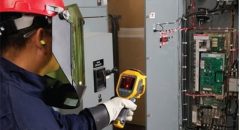
Identify, evaluate, and control process hazards with expert risk assessments, ensuring safe, reliable, and compliant industrial operations.

Implement site safety plans, audits, and training to prevent accidents, ensuring safer construction environments and regulatory compliance.

Design, engineer, and audit fire protection systems ensuring reliable performance, asset safety, and adherence to national safety standards.

Empowering workforce with certified HSE, fire, and industrial safety training programs for skill development and regulatory competence.

Create immersive, interactive VR safety training modules for realistic learning experiences in hazard recognition and emergency preparedness.
They are measurable criteria that define how safety-critical elements must perform to prevent or mitigate major accidents.
They ensure critical systems remain reliable, available, and effective across all operating conditions.
Typically engineering, operations, safety teams, and independent verifiers collaborate to develop and approve them.
Review frequency depends on the Written Scheme of Examination but generally includes routine inspections and periodic third-party verification.
Common references include ISO 45001, IEC 61511, API RP standards, and IOGP Safety-Critical Element guidance.
They ensure risk controls remain effective, aligned with hazard assessments, and compliant with safety case requirements.
Yes—digital asset integrity systems improve tracking, documentation, assurance evidence, and audit readiness.