

A comprehensive guide explaining SIL, its levels, assessment, certification, and its role in functional safety standards.
SIL is a measure of risk-reduction performance for safety functions, defined in IEC 61508 and applied across industries to ensure functional safety.
SIL quantifies how reliably a safety function must operate to reduce risks to an acceptable level, supporting safer system design and lifecycle management.
IEC 61508 establishes the framework for SIL determination, while sector-specific standards like IEC 61511 (process safety) adapt it for industry needs.
SIL is divided into four levels (SIL 1–SIL 4), each representing increasing risk reduction, reliability, and safety performance requirements.
PFDavg is the primary metric for low-demand safety functions; higher SILs require lower PFD values to ensure fewer failures on demand.
SFF and diagnostic coverage measure a system’s ability to detect faults; higher values help justify higher SIL classifications.
Provides basic risk reduction and is suited for lower-criticality applications requiring moderate reliability.
Used in systems with significant safety implications, requiring enhanced reliability and diagnostic capabilities.
Applied to high-risk scenarios, demanding advanced redundancy, diagnostics, and tightly controlled failure rates.
The highest integrity level, used only in extremely high-risk environments; requires exceptional reliability and rigorous lifecycle management.
Potential hazard identification and system deviations to determine where safety instrumented functions may be required.
Risk graphs, or LOPA (Layers of Protection Analysis), evaluate severity and likelihood to identify needed safety functions.
The required SIL is derived from risk analysis outcomes, ensuring adequate risk reduction consistent with IEC 61508 methodology.
Engineering calculations, design reviews, and testing verify that the safety function meets its SIL target throughout its lifecycle.
SIL classifies risk reduction for systems, while Performance Level (PL) categorizes machine safety reliability; both serve different industry standards.
Process industries use IEC 61511, machinery uses ISO 13849/IEC 62061, while oil and gas frequently require SIL-rated SIS for critical protection.
Components must meet hardware reliability, diagnostic coverage, and architectural constraints defined in IEC 61508.
Systems require complete lifecycle documentation, proof testing intervals, and verification calculations to demonstrate target SIL achievement.
TÜV, Exida, and SGS are recognized global bodies providing SIL certification and conformity assessments.
A SIF includes sensors, logic solvers, and final elements working together to achieve a defined risk reduction.
Each subsystem must meet architectural and reliability constraints to ensure overall SIL compliance.
Redundancy, diagnostics, proof testing, and component selection are combined to reach the required SIL performance.
Errors include overestimating risk, misusing risk graphs, or misinterpreting standard requirements.
Documentation often fails due to missing lifecycle records, incorrect PFD calculations, or poor alignment with IEC 61508 clauses.
Changes, lack of periodic proof testing, and poor maintenance can compromise SIL integrity over time.
Understanding and correctly implementing Safety Integrity Levels is crucial for reducing industrial risks, ensuring system reliability, and complying with functional safety standards such as IEC 61508 and IEC 61511. Whether you need support with SIL determination, certification, or full lifecycle management, expert guidance ensures safer and more compliant operations.
Aura Safety Risk Consultant
Delivering comprehensive HSE management and engineering consultancy solutions to ensure safety, compliance, and sustainable industrial growth.
+91 99994 02106
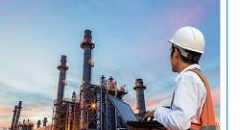
Identify, evaluate, and control process hazards with expert risk assessments, ensuring safe, reliable, and compliant industrial operations.
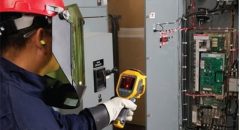
Identify, evaluate, and control process hazards with expert risk assessments, ensuring safe, reliable, and compliant industrial operations.
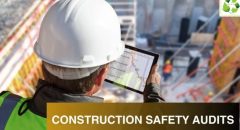
Implement site safety plans, audits, and training to prevent accidents, ensuring safer construction environments and regulatory compliance.

Design, engineer, and audit fire protection systems ensuring reliable performance, asset safety, and adherence to national safety standards.
Empowering workforce with certified HSE, fire, and industrial safety training programs for skill development and regulatory competence.

Create immersive, interactive VR safety training modules for realistic learning experiences in hazard recognition and emergency preparedness.
SIL is required when hazards cannot be reduced to acceptable levels using basic engineering controls alone.
Chemicals, oil & gas, pharmaceuticals, manufacturing, and power generation frequently depend on SIL-rated systems.
Revalidation aligns with proof test intervals or lifecycle reviews, ensuring ongoing compliance and performance.
No. SIL applies primarily to safety instrumented functions within IEC 61508/61511-regulated environments.
Currently, AI components can support diagnostics but typically cannot replace deterministic SIL-certified logic solvers.
Redundancy helps achieve SIL, but SIL also requires diagnostic coverage, PFD calculations, and lifecycle management.
Not necessarily—higher SILs introduce cost and complexity; the selected SIL must match the actual risk reduction required.